Table of Content
- Why Mobile App Development Matters More in 2026
- What the Best Mobile App Development Companies Do Differently in 2026
- 1. They start with discovery, not code
- 2. They architect for scale from day one
- 3. They are honest about timelines and costs
- 4. They think product, not just engineering
- 5. They have domain experience, not just technical skills
- 6. They prioritize security as a core requirement
- Top Mobile App Development Companies in 2026
- 1. Digisoft Solution
- 2. Appinventiv
- 3. Hyperlink InfoSystem
- 4. BairesDev
- 5. ScienceSoft
- Company Comparison at a Glance
- How to Evaluate a Mobile App Development Company: The Complete Checklist
- Portfolio and case studies
- Verified client reviews
- Technical expertise breadth
- Communication and project management process
- Post-launch support model
- Intellectual property ownership
- Security credentials
- Technology Stack Guide: What the Best Companies Are Building With in 2026
- Native Development
- Cross-Platform Development
- Backend and Cloud
- AI and Machine Learning
- Security Standards
- Mobile App Development Costs in 2026: The Realistic Breakdown
- Cost by app type:
- Cost by geography:
- AI feature costs:
- Cross-platform versus native:
- The hidden costs that kill budgets:
- Mobile App Development Trends That Matter in 2026
- Agentic AI in mobile apps
- Super-app architecture
- 5G-powered real-time experiences
- Edge computing and on-device processing
- Privacy-first design driven by regulation
- Cross-platform dominance
- Industries Where Mobile Apps Are Driving the Most Growth in 2026
- Fintech
- Healthcare
- eCommerce and Retail
- Logistics and Supply Chain
- Enterprise Mobility
- Why Outsourcing Mobile App Development Makes Business Sense in 2026
- Freelancer Versus Agency Versus Outsourcing Company: Which Model is Right for You
- When Hiring a Mobile App Development Company
- A Note on Digisoft Solution: Why They Belong on Your Shortlist
- Frequently Asked Questions
- How long does it take to build a mobile app in 2026?
- Should I build natively or cross-platform?
- What should a mobile app development contract include?
- Is AI integration worth the added cost?
- What is the best way to manage cost when outsourcing mobile app development?
- Conclusion
Digital Transform with Us
Please feel free to share your thoughts and we can discuss it over a cup of coffee.
Mobile apps are no longer just digital products. In 2026, they are how businesses earn revenue, serve customers, and scale operations. From AI-powered fintech platforms to real-time healthcare tools, the stakes of choosing the right mobile app development partner have never been higher.
This guide cuts through the noise. It covers the top mobile app development companies in 2026, what makes each one worth considering, how to evaluate your options, what things will cost, what technologies are driving the market, and most importantly, how to avoid wasting your budget on the wrong team.
Whether you are a startup building your first MVP, an enterprise transforming operations, or a growing business ready to scale, this article gives you everything in one place.
Why Mobile App Development Matters More in 2026
The global mobile app economy is generating revenue at a scale that was unimaginable just five years ago. With over 325 billion app downloads recorded this year and users increasingly living inside apps for finance, health, logistics, and commerce, businesses that do not invest in high-quality mobile experiences are actively ceding ground to competitors who do.
Consider what sits at the core of every successful mobile product in 2026: AI integration, real-time performance, cross-platform reach, security compliance, and scalable backend architecture. These are no longer optional upgrades. They are the baseline.
According to Gartner, 70% of enterprise applications now use functional AI agents. According to Business Research Insights, around 60% of mobile apps currently integrate some form of AI, and 50% of users prefer making purchases through apps over web platforms. The companies that build apps for this environment are fundamentally different from the ones that were building apps in 2020.
What the Best Mobile App Development Companies Do Differently in 2026
Most articles will give you a list of names. This section tells you what actually separates great companies from average ones, so you know what to look for.
1. They start with discovery, not code
The best companies invest serious time in understanding your users, your business model, and your long-term goals before a single line of code is written. If a company is eager to skip discovery and jump straight to development, that is a warning sign. Skipping this phase is one of the primary reasons apps fail to find market fit after launch.
2. They architect for scale from day one
An app that works beautifully for 100 users but crashes at 10,000 is a liability, not an asset. Top companies build with growth in mind even when growth is not happening yet. This means proper database design, modular architecture, API-first thinking, and cloud-native infrastructure from the start.
3. They are honest about timelines and costs
The companies worth working with will tell you hard truths early. The ones to avoid will tell you everything is possible, everything will be cheap, and everything will ship on time, right until it does not.
4. They think product, not just engineering
Leading firms go beyond coding by offering UX/UI design and product strategy services. A strong product mindset ensures the app is intuitive, accessible, and aligned with user behavior. This includes usability testing, wireframing, design systems, and accessibility standards. User-centric design drives higher engagement, better retention, and improved conversion rates.
5. They have domain experience, not just technical skills
Look for companies that have built apps across industries such as fintech, healthcare, retail, logistics, and SaaS. Domain experience helps teams design scalable architectures, integrate third-party APIs, and anticipate unexpected blockers. This reduces risk, shortens discovery phases, and ensures faster alignment with market needs.
6. They prioritize security as a core requirement
Security is not a feature to add at the end. Leading mobile app development companies build security into architecture from the start, covering data encryption, secure API design, authentication frameworks, and compliance with regulations like GDPR, HIPAA, and PCI-DSS depending on your industry.
Top Mobile App Development Companies in 2026
After reviewing data from Clutch, GoodFirms, DesignRush, and independent industry sources, here are the companies leading the field this year.
1. Digisoft Solution

Digisoft Solution has established itself as a leading mobile app development and IT consulting company trusted by startups, SMEs, and enterprises globally. What makes Digisoft Solution genuinely different is the combination of technical depth and business understanding they bring to every engagement.
When you work with Digisoft Solution, you get a team that thinks like a product partner, not just a vendor. They cover the full development lifecycle, from requirement analysis and UI/UX design through backend architecture, quality assurance, deployment, and ongoing maintenance.
Their core strengths include:
- Custom iOS and Android app development using Swift, Kotlin, and the latest native SDKs
- Cross-platform development with Flutter and React Native, cutting development time by 30 to 50% compared to building separate native apps
- AI and machine learning integration into mobile products
- Staff augmentation & dedicated teams
- Enterprise mobility solutions for complex workflow automation
- Fintech, healthcare, eCommerce, logistics, and SaaS app expertise
- Transparent Agile delivery with dedicated project managers
Best For
Startups to enterprises looking for a reliable, scalable, and cost-effective development partner
Digisoft Solution brings the cost advantages with their hiring models without compromising on quality or communication. For businesses looking to build production-grade mobile applications without overspending, partnering with a specialized outsourcing company like Digisoft Solution is one of the smartest decisions available in 2026.
2. Appinventiv

Website: https://appinventiv.com/
Appinventiv is one of the most recognized names in mobile technology in 2026. Known for helping startups, enterprises, and Fortune 500 brands, the company offers full-cycle product development from strategy to deployment and scaling. What makes Appinventiv stand out is its ability to blend innovation with execution. They work on AI apps, fintech platforms, healthcare products, logistics systems, and enterprise mobility solutions.
Core Services
- End-to-end mobile app development
- Product strategy & consulting
- UI/UX design
- AI, blockchain, and IoT app development
- Cloud-native app architecture
- DevOps & performance optimization
- Enterprise mobility solutions
Key Strengths
- Proven experience with large-scale enterprise systems
- Strong compliance and security standards (ISO-certified)
- Ability to handle high-traffic, high-performance apps
- Agile and DevOps-driven delivery
Best for: Businesses that need both strategy and execution under one roof, particularly in high-complexity verticals.
3. Hyperlink InfoSystem

Website: https://www.hyperlinkinfosystem.com/
A globally recognized mobile app development company that has been delivering digital solutions since 2011. With a strong presence in the USA, UK, UAE, Canada, Australia, and India, Hyperlink InfoSystem has successfully partnered with startups, SMEs, and enterprises worldwide. Their expertise extends across healthcare, education, finance, retail, real estate, and beyond. They specialize in custom mobile applications, enterprise solutions, AI-powered systems, blockchain applications, AR/VR experiences, and IoT-enabled platforms.
Core Services
- Custom mobile app development (iOS, Android)
- Cross-platform app development
- AI & machine learning solutions
- Blockchain app development
- AR/VR app development
- IoT-enabled mobile applications
- Enterprise software solutions
Key Strengths
- Extensive global presence
- Large portfolio (thousands of apps delivered)
- Wide technology stack expertise
- Flexible pricing models
Best for: Businesses needing a broad range of technologies across diverse industries, especially when budget flexibility matters.
4. BairesDev

Website: https://www.bairesdev.com/
BairesDev has built a strong reputation by providing top-tier engineering talent across North and Latin America. Their nearshore model helps companies scale development quickly while maintaining quality and time-zone alignment with US and European businesses. Businesses often choose BairesDev when speed matters and they need dedicated teams for mobile app projects.
Core Services
- Mobile app development (native & cross-platform)
- Staff augmentation & dedicated teams
- Backend and API development
- Cloud & DevOps services
- QA & automated testing
Key Strengths
- Access to senior engineering talent
- Strong time-zone alignment for US/EU companies
- Fast team scaling capability
- High-quality code standards
Best for: Growing companies that need to scale development quickly with senior engineers, particularly when US time-zone overlap is important.
5. ScienceSoft

Website: https://www.scnsoft.com/
ScienceSoft has decades of experience in software development and consulting. In 2026, they remain a trusted name for secure mobile solutions in healthcare, banking, manufacturing, and retail. They are known for disciplined processes, documentation, and enterprise reliability. If your project requires structure, security, and mature processes, ScienceSoft is a strong fit.
Core Services
- Enterprise mobile app development
- IT consulting & digital transformation
- UX/UI design
- Backend & cloud development
- Cybersecurity & compliance solutions
- App modernization & maintenance
Key Strengths
- Strong compliance (HIPAA, GDPR, PCI-DSS)
- Structured development processes
- Enterprise-grade documentation & governance
- Long-term reliability
Best For
Enterprises needing secure and compliant mobile applications
Company Comparison at a Glance
|
Company |
Best For |
Strength |
Delivery Model |
|
Digisoft Solution |
Startups to Enterprises |
Full-cycle, cost-efficient, AI-ready |
Outsourcing/Dedicated/ |
|
Appinventiv |
Strategy + Execution |
Full-cycle, Fortune 500 track record |
Agency |
|
Hyperlink InfoSystem |
Broad tech range |
Multi-vertical, global reach |
Agency |
|
BairesDev |
Scaling fast |
Senior nearshore talent |
|
|
ScienceSoft |
Regulated industries |
Compliance, security, documentation |
Consulting/Agency |
How to Evaluate a Mobile App Development Company: The Complete Checklist
This is where most businesses make expensive mistakes. Here is the framework to use before signing any contract.
Portfolio and case studies
Review live apps in app stores, not just screenshots on a website. Look at complexity, performance, UX quality, and whether they have built apps in your industry before.
Verified client reviews
Check platforms like Clutch, GoodFirms, and G2 for verified client feedback. Focus on long-term partnerships and delivery consistency, not just positive reviews from short engagements.
Technical expertise breadth
A strong partner should have proficiency in Swift and Kotlin for native development, Flutter and React Native for cross-platform builds, backend frameworks, cloud platforms like AWS and Google Cloud, and at minimum a working knowledge of AI/ML integration.
Communication and project management process
Ask how they handle sprint planning, issue escalation, and status reporting. Request a sample project roadmap. A company with a clear, documented process for managing delivery risk is far safer than one that promises flexibility without structure.
Post-launch support model
An app is not done at launch. Ask explicitly about bug-fixing SLAs, feature iteration processes, performance monitoring, and how they handle app store updates when iOS and Android change their requirements.
Intellectual property ownership
Confirm in writing that you own 100% of the source code, design assets, and all deliverables from day one. Never accept a contract where IP ownership is ambiguous or transfers only after full payment.
Security credentials
For enterprise projects, ask about ISO 27001 certification, secure development practices, and how they handle data privacy compliance relevant to your target market.
Technology Stack Guide: What the Best Companies Are Building With in 2026
Understanding the technology choices your development partner makes has long-term consequences for your costs, scalability, and ability to find developers in the future. Here is what the market looks like in 2026.
Native Development
Swift remains the primary language for iOS development. Kotlin is the standard for Android. Native development delivers the best performance, the deepest access to device hardware, and the most seamless experience for users. The trade-off is cost and timeline, since you are building and maintaining two separate codebases.
Cross-Platform Development
Flutter and React Native are the leading cross-platform frameworks in 2026, with Flutter showing higher popularity among developers for its performance and visual fidelity. React Native retains strong adoption because of the JavaScript ecosystem and its flexibility with backend service integration. Using cross-platform frameworks reduces development costs by 30 to 50% compared to building separate native apps, and is the smarter starting point for most businesses in 2026.
.NET MAUI is gaining traction specifically in Microsoft-centric enterprise environments.
Backend and Cloud
AWS, Google Cloud, and Azure are the dominant cloud platforms. API-first architecture is now standard. GraphQL is increasingly preferred over REST for mobile APIs because it reduces over-fetching and speeds up load times. Firebase and Supabase are common for rapid MVPs.
AI and Machine Learning
TensorFlow Lite and Apple Core ML enable on-device AI processing, which improves speed and privacy. Most business apps do not need custom ML models. Using existing AI APIs for recommendations, search, or customer support delivers strong results at a fraction of the cost of building from scratch. For most mobile products, an AI budget of $10,000 to $30,000 is enough to add genuinely intelligent features.
Security Standards
OAuth 2.0 and OpenID Connect for authentication. AES-256 encryption for data at rest. TLS 1.3 for data in transit. Zero-trust architecture principles for enterprise applications.\
Mobile App Development Costs in 2026: The Realistic Breakdown
Cost is consistently the question that leads to the most confusion. Here is an accurate picture.
Mobile app development in 2026 costs anywhere from $40,000 for a simple application to more than $400,000 for complex, feature-rich platforms. Enterprise-level solutions can exceed $500,000 depending on integration complexity, compliance requirements, and scale. AI adds to the initial cost but significantly improves long-term ROI through automation and personalization.
Cost by app type:
A simple app with 3 to 5 screens, basic authentication, and minimal backend work typically falls in the $15,000 to $50,000 range. A mid-complexity app with custom UI, API integrations, user accounts, and real-time features usually costs $50,000 to $150,000. A complex enterprise app with AI, IoT integration, third-party system connections, and advanced security typically starts at $150,000 and scales higher from there.
Cost by geography:
This is where outsourcing creates the most significant value. US-based development typically costs $100 to $250 per hour. UK and Western European rates run $70 to $150 per hour. Eastern European companies charge $40 to $100 per hour. Indian and South Asian companies charge $20 to $60 per hour. Latin American nearshore firms run $40 to $80 per hour.
An experienced outsourcing partner like Digisoft Solution can deliver the same quality product at a fraction of the cost of a US or UK-based agency, without sacrificing communication, technical depth, or delivery reliability.
AI feature costs:
Adding a basic AI recommendation engine typically costs $15,000 to $40,000. A conversational AI chatbot built on a third-party API costs $8,000 to $20,000. Custom machine learning models trained on your own proprietary data start at $50,000 and scale significantly. For most businesses, starting with pre-built AI APIs delivers strong results at a much lower investment.
Cross-platform versus native:
Cross-platform development using React Native or Flutter reduces costs by 30 to 50% compared to building two separate native apps. For most businesses in 2026, this is the smarter starting point.
The hidden costs that kill budgets:
The costs most companies fail to account for include post-launch maintenance (budget 15 to 20% of development cost annually), App Store and Google Play compliance updates when platform policies change, performance monitoring infrastructure, data storage and cloud costs at scale, and third-party API subscription fees.
AI in app development is also helping reduce overall costs. AI-assisted development tools and automated testing are reducing development time by 20 to 40% across the industry, and these savings are passing through to clients who choose partners that actively use these tools.
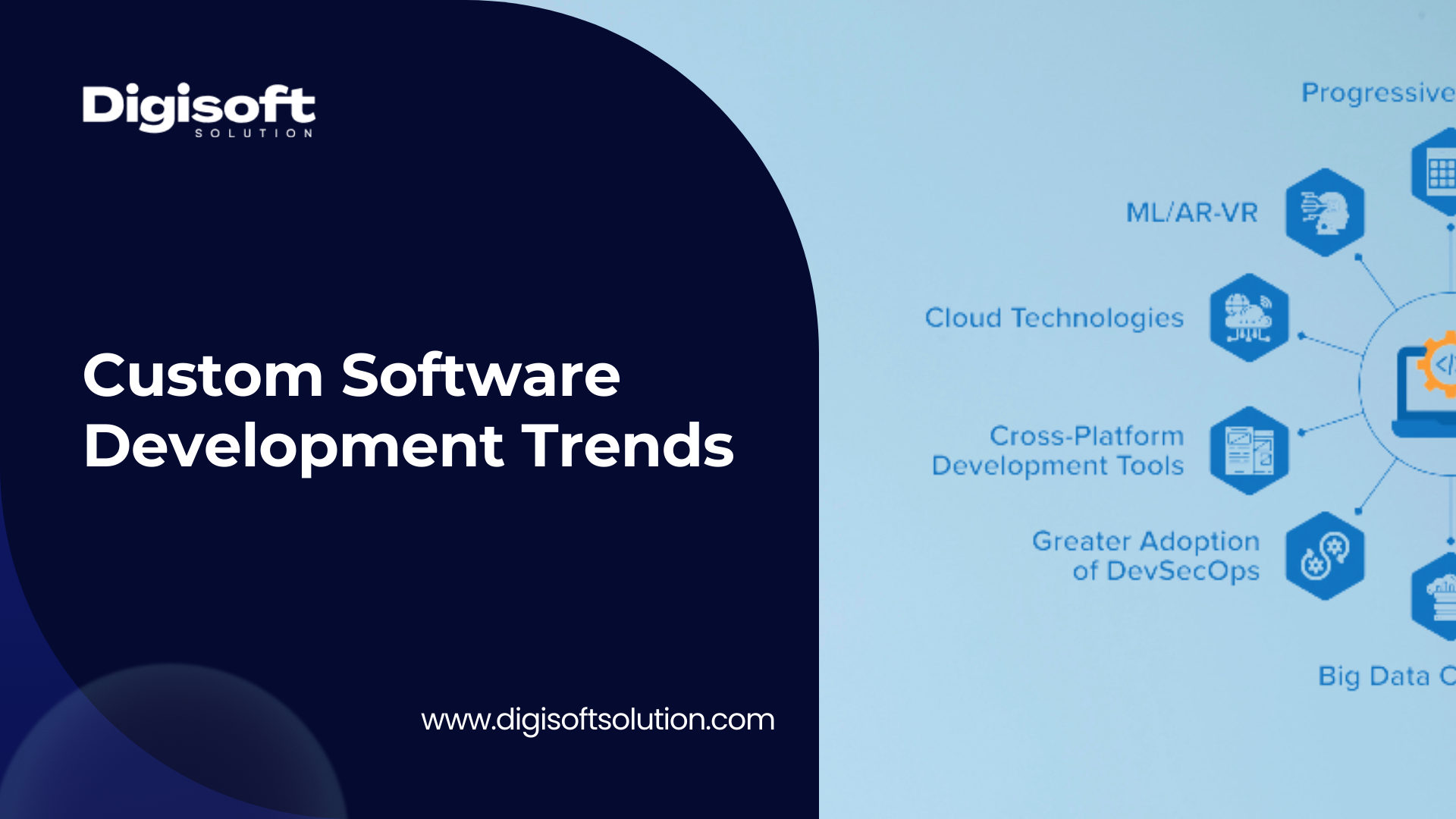
Mobile App Development Trends That Matter in 2026
Not every trend deserves your attention. These are the ones with real impact on business outcomes.
Agentic AI in mobile apps
We are transitioning from passive to agentic software. Agentic AI consists of autonomous programs embedded in your app that monitor user behavior and perform actions automatically, rather than waiting for a click. Modern smartphone chips have dedicated neural engines capable of running AI models under 100MB locally, which improves both privacy and latency. Spotify, for instance, uses on-device sensors to detect user behavior and generate personalized recommendations without sending data to a server.
Super-app architecture
Super apps combine multiple services in a single platform. WeChat manages doctor appointments, taxi hails, payments, and messaging for over 1.3 billion users. In the West, Uber has successfully integrated food delivery, car rentals, and train bookings. According to industry data, 2.5 billion people globally will use super apps as their primary app by 2026. Businesses that can consolidate multiple user journeys into a single experience gain massive retention advantages.
5G-powered real-time experiences
5G is enabling genuinely new categories of mobile application, particularly for AR, live streaming, real-time collaboration, and remote industrial monitoring. Apps that were constrained by bandwidth or latency limitations are now practical to build.
Edge computing and on-device processing
Moving processing from distant data centers to the device itself or the network edge eliminates latency for AR, live biometrics, and real-time navigation. DoorDash, for instance, shifted routing logic to the edge to improve delivery accuracy. For any app that requires real-time data processing, edge architecture is becoming the standard.
Privacy-first design driven by regulation
Evolving data regulations across the US, EU, and Asia are forcing developers to treat privacy as an architectural requirement, not an afterthought. Federated learning, on-device processing, and privacy-preserving analytics are becoming standard tools in the developer's toolkit.
Cross-platform dominance
Flutter and React Native have effectively ended the argument about whether cross-platform development can match native quality for most use cases. The combination of cost efficiency and quality has made cross-platform the default starting point for new projects.
Industries Where Mobile Apps Are Driving the Most Growth in 2026
Fintech
Mobile-first banking, investment platforms, payment processing, and digital wallets are the highest-investment category in app development. Security, real-time transaction processing, and regulatory compliance are the critical requirements. Companies that can navigate these requirements are commanding significant premium rates.
Healthcare
AI-powered diagnostics, telemedicine, wearable integration, remote patient monitoring, and chronic care management apps are transforming healthcare delivery. HIPAA compliance and EHR system integration are non-negotiable requirements for this space.
eCommerce and Retail
AR product previews, AI-powered recommendations, multi-currency and multi-language support, and frictionless checkout are the competitive battlegrounds in 2026. The cost of building a competitive retail app has increased, but so has the revenue potential.
Logistics and Supply Chain
Real-time tracking, IoT sensor integration, route optimization, and warehouse management tools built as mobile applications are delivering measurable operational savings for companies in this space.
Enterprise Mobility
Internal workforce apps, field service management, CRM mobile extensions, and ERP integrations represent a large and growing category. Companies that invest in enterprise mobility reduce operational overhead and improve employee productivity at scale.
Why Outsourcing Mobile App Development Makes Business Sense in 2026
Outsourcing is not a compromise. It is a strategic advantage when done correctly.
The US mobile app development market remains one of the most mature globally, but the premium pricing does not always translate to proportionally better outcomes for most project types. For businesses that are not building the most complex enterprise systems, outsourcing delivers the same engineering quality at 40 to 70% lower cost.
The key differences from five years ago are that communication tools, project management frameworks, and Agile delivery practices have matured to the point where geography is no longer a meaningful barrier to quality output. The best outsourcing partners operate with dedicated project managers, transparent reporting, defined escalation paths, and cultural alignment that makes collaboration effective.
When evaluating an outsourcing partner, the questions to focus on are not about location. They are about discovery processes, technical expertise, communication standards, post-launch support, and IP ownership. A company like Digisoft Solution that has built its reputation on delivering production-grade software for clients globally demonstrates that outsourcing, when done with the right partner, produces better outcomes than many on-shore alternatives at a fraction of the price.
Freelancer Versus Agency Versus Outsourcing Company: Which Model is Right for You
Freelancers are cost-effective for small, well-defined tasks but may lack the bandwidth or complementary skills needed for complex, long-term projects. They work for short engagements where scope is completely fixed. They are not appropriate for anything that requires design, QA, project management, backend engineering, and frontend development simultaneously.
Agencies provide multidisciplinary teams including designers, developers, QA, and project managers under one roof, which reduces coordination overhead and allows resources to scale quickly. They are best suited for full product builds and ongoing product development relationships.
Outsourcing companies like Digisoft Solution combine the team depth of an agency with the cost efficiency of offshore rates. They are best suited for businesses that need a true development partner at sustainable long-term cost, particularly for products that require ongoing iteration, scaling, and technical evolution after launch.
Choose based on scope, budget, and the level of risk you are willing to manage.
When Hiring a Mobile App Development Company
Recognizing these patterns before signing a contract saves significant budget and time:
Inadequate discovery process: Any company that skips or rushes requirements gathering is signaling that they build what they want to build, not what you need.
Unrealistic promises on timelines and cost: A $300,000 app cannot be built for $30,000. If something sounds too good to be true in a proposal, it is. Budget overruns caused by underquoting are among the most common reasons client relationships break down.
Poor or vague communication skills: If a company struggles to communicate clearly during the sales process, it will be worse during development.
No post-launch support model: Development does not end at launch. If a company has no structured offering for maintenance, updates, and ongoing support, you will face serious challenges when iOS 20 or Android 17 breaks something in your app.
Ambiguous IP ownership: If the contract does not clearly state that you own all source code and deliverables from the moment they are created, negotiate this before signing.
No verifiable portfolio or client references: Any company worth hiring will be able to show you live apps and connect you with past clients. If they cannot, proceed with caution.
A Note on Digisoft Solution: Why They Belong on Your Shortlist
Digisoft Solution represents the kind of software development outsourcing partner that is built for the realities of 2026, not 2018.
They bring genuine technical expertise in the technologies that matter most right now: native iOS and Android development, Flutter and React Native for cross-platform efficiency, AI and ML integration, enterprise backend architecture, and cloud-native deployment. They cover every stage of the product lifecycle, from discovery and design through development, QA, launch, and post-launch support.
What separates Digisoft Solution from generic development shops is that they approach every project from a business outcomes perspective. The goal is not to deliver code. The goal is to deliver a product that solves real user problems, supports your business model, and scales with your growth.
For businesses that are serious about building mobile products that compete in 2026's market, but also serious about managing cost and delivery risk, Digisoft Solution offers a compelling combination that is difficult to find at this level of quality.
Talk to the Digisoft Solution team about your mobile app project
If you are evaluating development partners right now, put Digisoft Solution on your shortlist. They are not just capable of building what you need. They are the type of partner that will help you figure out exactly what you need before you invest a single dollar in development.
Frequently Asked Questions
How long does it take to build a mobile app in 2026?
A simple MVP typically takes 2 to 4 months. A mid-complexity app takes 4 to 8 months. A complex enterprise application can take 9 to 18 months or longer, depending on integration complexity and compliance requirements. Timelines are directly affected by how clear your requirements are at the start.
Should I build natively or cross-platform?
For most businesses in 2026, cross-platform development with Flutter or React Native is the right starting point. It reduces costs by 30 to 50%, reaches both iOS and Android users simultaneously, and delivers performance that is indistinguishable from native for the vast majority of use cases. Native makes sense when you need deep hardware integration, maximum performance for gaming or AR, or access to platform-specific features that cross-platform frameworks do not yet support.
What should a mobile app development contract include?
The contract should explicitly cover IP ownership (you own everything from day one), payment milestones tied to delivery, change request procedures, post-launch support terms, data security obligations, and confidentiality provisions. Never sign a contract that does not clearly address all of these.
Is AI integration worth the added cost?
For most mobile products in 2026, yes. AI features like personalization, predictive search, intelligent notifications, and conversational interfaces measurably improve user retention and conversion rates. The question is not whether to integrate AI, but how to do it cost-efficiently. Starting with pre-built AI APIs rather than custom models is the right approach for most business applications.
What is the best way to manage cost when outsourcing mobile app development?
Start with a clearly defined MVP scope. Prioritize features ruthlessly based on user value, not internal preferences. Use cross-platform development unless there is a compelling reason for native. Choose an outsourcing partner with a transparent Agile process and defined sprint deliverables, so you can see progress and manage scope throughout the project, not just at the end.
Conclusion
In 2026, mobile apps are where business happens. The question is not whether to invest in mobile development. The question is who you trust with that investment.
The companies featured in this guide represent some of the strongest options available globally. Among them, Digisoft Solution stands out as a leading software development outsourcing company that combines technical excellence, full-cycle delivery capability, and the kind of business partnership mindset that turns development engagements into long-term competitive advantages.
Digital Transform with Us
Please feel free to share your thoughts and we can discuss it over a cup of coffee.


















































































































 Kapil Sharma





 Digisoft Solution