Veridian Urban Systems: Building Intelligent Urban Solutions
How Digisoft Solution engineered an AI‑driven urban diagnostic and intelligence platform that turns scattered city data into structured dashboards, KPIs and real‑time insights for smarter, more confident decision making.








About Our Client
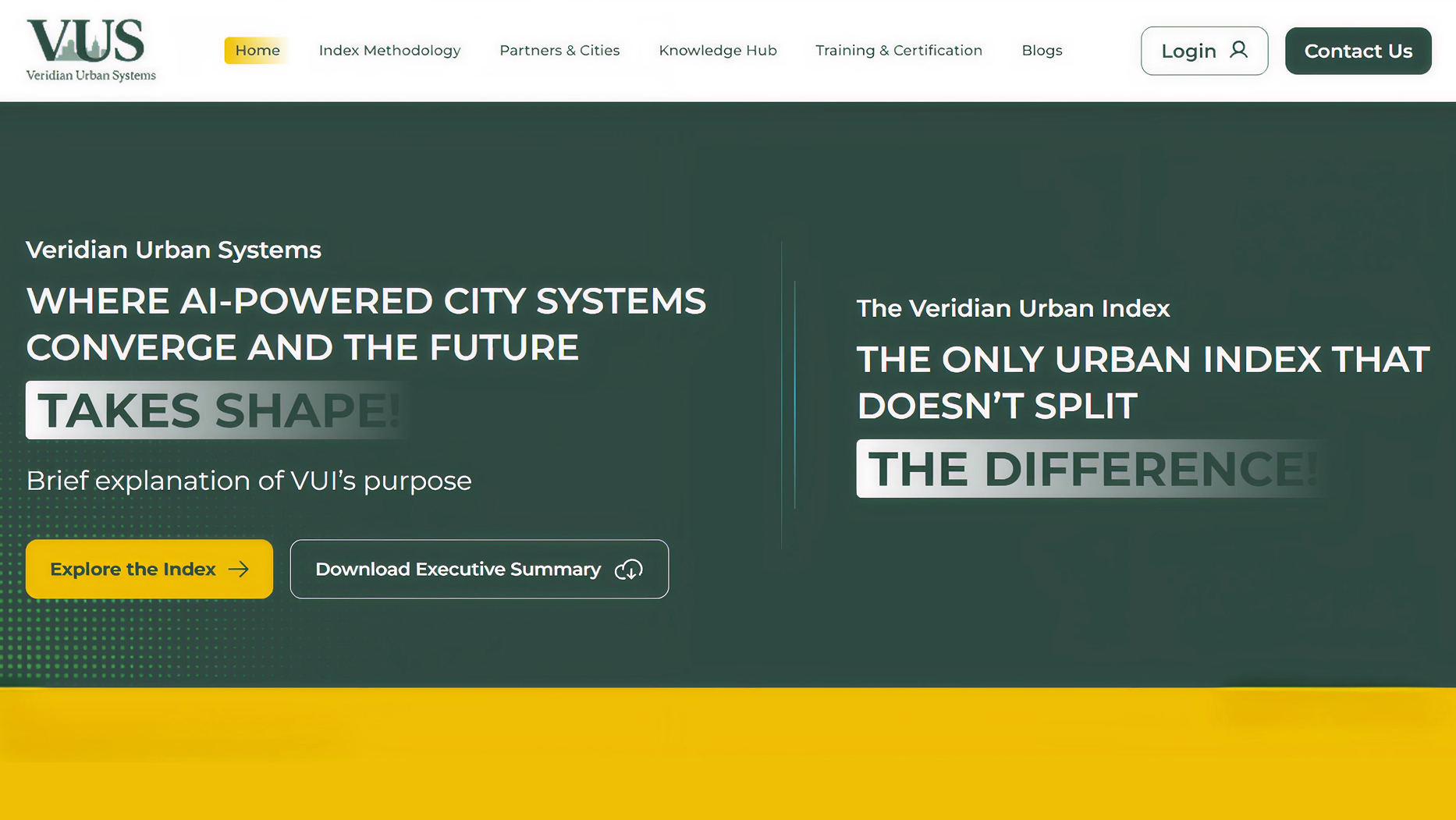
Veridian Urban Systems
- IndustryUrban Intelligence
- RegionUnited States
- PlatformAI Diagnostic Suite
- Delivery8 Months
Veridian Urban Systems helps cities make sense of complex data and plan effectively. They provide administrators, analysts, and planners with tools to assess urban performance across governance, infrastructure, social services, and resilience. Their goal is to transform scattered datasets into trustworthy insights so cities can prioritize investments, track improvement, and benchmark against other regions.
Veridian supports both detailed, city‑level analysis and broader regional comparisons, enabling consistent, evidence‑based decisions. With this platform, city leaders can act strategically, monitor progress, and make decisions with confidence, ensuring transparency, reliability, and measurable impact in urban planning and development.
Project Overview
Turning Scattered City Data Into Clear, Actionable Insights
Veridian Urban Systems wanted a platform that turns scattered city data into clear, actionable insights. They partnered with Digisoft Solution to create a system that allows multiple evaluators to input information. The platform consolidates data efficiently and presents results in a clear, actionable format.
The platform uses APIs to enable smooth data flow and includes an AI assistant that provides insights and answers queries using platform data. Users can see trends, compare cities, and track performance over time. This system helps city officials make informed decisions, turning complex information into practical guidance for planning, evaluation, and management.
The Concept
A Unified Approach To Urban Intelligence
City data is often stored across different departments and in various formats, making it difficult to interpret. Veridian Urban Systems aimed to create a platform that organizes all information in one place. Evaluators submit scores simultaneously, with analysts ensuring accuracy. The system converts raw data into clear dashboards, key performance indicators, and visual comparisons.
An AI chat tool guides users through insights, helping them understand trends and progress. With these features, the platform allows city leaders to make confident, consistent, and transparent decisions that improve urban management over time.
Turning Urban Data Challenges into Clear Solutions
Fragmented City Data To Structured, Trustworthy Insights
Veridian required a system that could absorb inconsistent, multi‑source city data and turn it into a single, auditable source of truth for decision makers. We engineered a structured evaluation, scoring and dashboard layer to make that possible.
Unified Data Collection
Urban data was scattered across departments in various formats, slowing and error‑prone analysis. We built a system that captures all inputs in a structured, systematic format. Every entry is timestamped, tracked, and validated to ensure accuracy and consistency, eliminating errors from manual consolidation.
Standardized Evaluation Framework
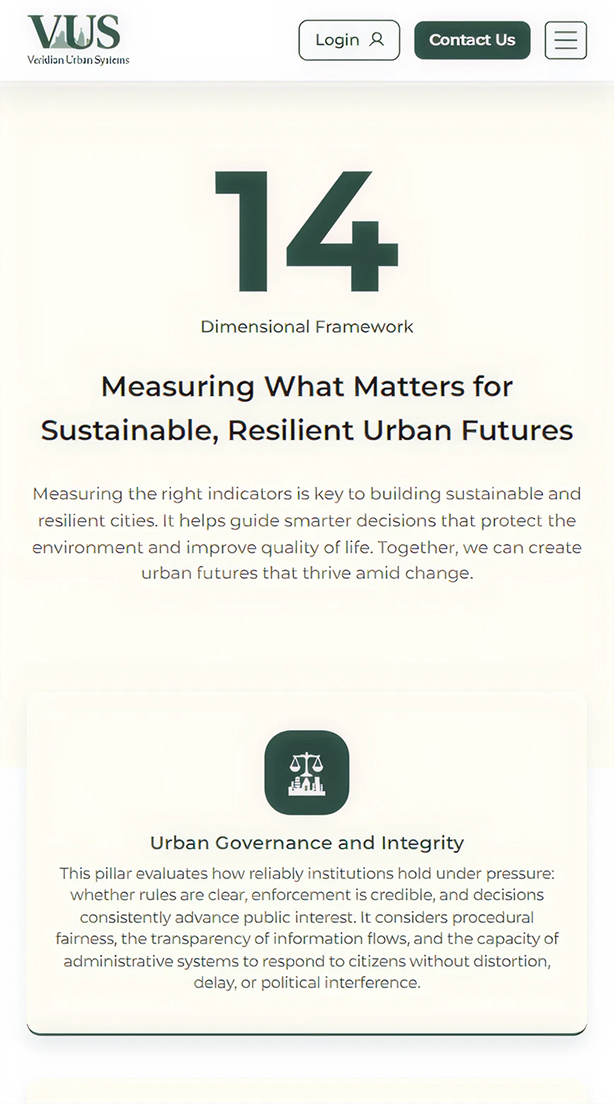
Different teams assessed cities using varied methods, making comparisons unreliable. Our team introduced a consistent evaluation framework covering 13–14 key city areas. Rules and validation checks ensure each assessment is repeatable and trustworthy while allowing controlled updates over time.
Consistent Evaluator Scoring
Multiple evaluators can independently score a city. Variance detection flags differences in real time, and analysts resolve conflicts, guaranteeing reliable outcomes.
Centralized Insights for Decision‑Makers
Role‑based dashboards deliver clear, actionable insights. An AI assistant answers natural‑language queries instantly, enabling leaders to make informed decisions without waiting for manual reports.
Powering Smarter Cities: Core Features & Capabilities
Structured, Actionable Insights With Accuracy & Transparency
Veridian Urban Systems turns city data into structured, actionable insights, ensuring accuracy, consistency, and transparency at every step.
Screens From the Live Platform
Surfaces We Designed & Engineered Into Production
Selected moments from the shipped Veridian Urban Systems platform, the surfaces where multi‑role evaluation, KPI dashboards, city comparisons and AI assistance all come together in the live experience.




Technologies We Used
A Focused Stack For AI‑Driven Urban Intelligence
For Veridian Urban Systems, we selected a resilient, service‑oriented stack capable of handling complex datasets, multi‑role workflows, KPI computation, and natural‑language AI insights, each technology plays a specific role in delivering a reliable smart city platform.
.NET
Secure, scalable backend powering the scoring engine, multi‑evaluator workflows and KPI computation.
Angular
Role‑based dashboards, pillar assessments and interactive visualizations for every user type.
SQL Server
Timestamped evaluations, scores and historical data, fully traceable and comparable year‑on‑year.
Web APIs
Smooth data flow between modules, external systems and the AI layer, consistent across the platform.
OpenAI API
In‑platform assistant answering natural‑language queries with insights drawn from live city data.
Our Advanced Testing Approach for Scalable Systems
Validated End‑To‑End For Data Accuracy, Security & Scale
At Digisoft Solution, we implemented a comprehensive testing strategy to ensure data accuracy, reliable performance, and secure multi‑role operations across the platform.
Functional & Edge Case Testing
We tested all workflows using normal, missing, and unusual data. Every scenario confirmed the platform behaves predictably for every user role.
- Verified that calculations, scores, and results remain correct and consistent.
- Validated role‑specific behavior across the full evaluation lifecycle.
- Confirmed graceful handling of partial, missing, and unusual data inputs.
Role & Permission Testing
Checked that each user role can only access appropriate features, keeping all processes secure and reliable.
- Validated access boundaries for Admin, Analyst, Evaluator, and City User.
- Confirmed no one could perform unauthorized actions across modules.
- Verified role changes and revocations take effect instantly and safely.
Data Integrity Testing
We ensured all inputs and stored information are accurate, complete, and consistent.
- Verified calculations, records, and historical data remain correct and fully traceable over time.
- Confirmed timestamped entries stay immutable and auditable.
- Validated consistency between raw inputs, scores, and reported KPIs.
Interface & System Connections Testing
Our team verified the correct communication of all system components, including the AI helper.
- Confirmed that information passes accurately between services and APIs.
- Validated that error and retry flows handle failures gracefully.
- Verified consistent behavior of the AI assistant across modules and roles.
Performance & Load Testing
Simulated large amounts of data and multiple users to confirm the system remains quick, stable, and responsive.
- Validated dashboard, report, and KPI response times under realistic load.
- Confirmed stability across concurrent users and long‑running calculations.
- Verified scalability targets for future cities and datasets.
Security & Access Testing
Checked data protection, secure communication, and proper access rules to ensure sensitive information remains safe.
- Confirmed users cannot bypass the platform's controls or escalate privileges.
- Verified secure channels for all API and AI assistant communication.
- Validated audit trails for every security‑relevant action.
Automation, Rechecking & User Approval
Automated tests run after every update, combined with real‑user validation to keep the platform reliable in daily operations.
- Confirmed workflows, dashboards, and results are correct and complete.
- Validated that everyday tasks stay simple and intuitive for operators.
- Established CI‑driven test coverage for each release.
Display & Device Testing
Ensured the system works consistently across different devices, screen sizes, and browsers for every user.
- Validated screens, reports, and visuals render correctly across devices.
- Verified responsive behavior from desktop to tablet and mobile.
- Confirmed accessibility of key actions and visualizations.
Our Approach & Timeline
From Discovery To Launch In 7–8 Focused Months
To transform Veridian Urban Systems' vision into a robust urban intelligence platform, we followed a structured, phased approach, each phase producing shippable outcomes from strategy through architecture, development, validation, and deployment.
Discovery & Alignment
Analyzed workflows, mapped data fragmentation & defined roles, KPIs & evaluation pillars.
Architecture & Planning
Designed a modular, service‑oriented architecture for complex datasets & AI insights.
Core Development
Built .NET, Angular, SQL Server & OpenAI modules in parallel to accelerate progress.
Intelligence Layer Development
Layered KPIs and indices, YoY views, dashboards, exports, cross-sector linkage, alerts, and the OpenAI assistant.
Testing & Optimization
Tested workflows, roles, integrity, AI integrations, load, security, UAT, and cross-device UI; tuned performance.
Deployment & Final Optimization
Released to production with final hardening for repeatable evaluations and scalable growth.
Outcome or Measurable Results
A Fully Operational, Scalable Platform Built To Serve More Cities
Standardized Evaluations, Reliable, Repeatable City Assessments
Secure User Roles, Admins, Analysts, Evaluators & City Users
Faster Workflows, Streamlined Data Capture, Scoring & Reporting
Instant, Self‑Service Access To Actionable Urban Data
We delivered a fully operational, scalable platform for Veridian Urban Systems, transforming fragmented, manual city evaluations into an automated, reliable system. The platform combines a repeatable, defensible framework with accelerated reporting, giving city administrators faster insights and stronger decision support.
In just 8 months, we combined scattered city data into a single platform for consistent urban evaluation, making processing faster, speeding up results, and allowing multiple users to work at the same time. A future‑ready, scalable architecture now supports new cities, datasets, and recurring assessments, giving Veridian a foundation to grow with every new urban engagement.