HealthShield Credentialing: Simplified Document Verification & Custom Membership Solutions








About Our Client
HealthShield Credentialing
- IndustryHealthcare Technology
- RegionUnited States
- PlatformCloud-based credentialing platform
- Delivery2 Months
HealthShield Credentialing is used by mid-sized healthcare organizations, including hospitals, clinics, and medical groups. Credentialing and administrative staff use it to manage provider onboarding and verification at scale. It handles high volumes of requests across HR, compliance, and operations.
Previously, the process relied on manual coordination, scattered documents, and email-based approvals, leading to delays and inconsistent records.
Project Overview
Structured Credentialing With Secure Document Lifecycle Control
HealthShield Credentialing is a web-based system that enables healthcare professionals to manage and share credentialing documents in a structured, digital environment. It replaces manual record handling with a structured, digital platform for secure document sharing. This enforces consistent lifecycle rules through validation and version control.
The Concept
Professionals, Organizations & Documents Linked by Role
The system defines three core entity types: professionals, organizations, and documents, which are linked through relational mappings. Access to data is managed through role-based controls that determine visibility at the entity level.
Versioning is handled at the database level, where each upload creates a new record while retaining previous versions for audit history. Files are stored with version references and shared through restricted, time-bound links.
Custom server-side logic governs approvals, versioning, and access control—enabling flexible healthcare credentialing rules beyond standard SaaS or plugin workflows.
Key Challenges Addressed
Credentialing At Scale Required Control, Visibility & Compliance
Centralized Data Handling
Manage employee and employer data within a single dashboard while preventing duplication and confusion. This required a well-defined approach to storing, organizing, and retrieving large sets of information without duplication or confusion.
Multiple Document Management
The platform had to handle various document types, including licenses, certifications, and identity records. Each document type required separate handling rules while still being stored in a unified system.
Approval-Based Access
Documents remained restricted until verified. This meant building a controlled flow in which files are only made visible after passing an approval step.
Role-Based Visibility
Different users, such as employees and employers, needed different levels of access. The system had to ensure that each role could only view and interact with relevant data.
Status & Lifecycle Tracking
Every document was tracked from upload through approval, updates, and expiry. This required maintaining clear status updates throughout the document’s lifecycle.
Limitations of Standard Tools
Existing SaaS and plugin-based systems lacked support for custom approval workflows, version-controlled document states, and granular role-based access. This is needed for healthcare compliance, including complex relationships and conditional access rules.
Technical Solutions We Implemented
Custom Workflows For Verified, Role-Driven Access
A layered, modular design separates data handling, access control, and processing logic—supporting maintainability and future scalability.
Custom Data Structure Design
The data model separates employees, employers, and documents into independent structures for clarity and scalability.
Linked Data Relationships
Entities are connected through defined relationships, allowing consistent retrieval of employee profiles, employer accounts, and associated documents without duplication or inconsistency.
Controlled Approval Process
A rule-based workflow governs document visibility. Records remain restricted until they pass verification and are approved, ensuring only validated data becomes accessible.
Secure Access Handling
Access permissions are enforced at the server level by validating user roles and document states before data retrieval, ensuring only authorized users can access records.
Simple Administrative Dashboard
A streamlined dashboard enables efficient record management, supporting reviews, updates, and operational control without added complexity.
Modular Architecture with Separated Layers
The system follows a layered, modular design that separates data handling, access control, and processing logic. This supports maintainability and future scalability while reducing redundant database operations through pre-validation before persistence.
This system uses custom server-side logic for approvals, versioning, and access control, unlike standard plugins or SaaS tools with rigid workflows. This enables flexible healthcare credentialing rules.
Why This Credentialing Architecture Works
Verified Data Only Reaches the Right Roles
Controlled data storage, defined verification states, and automated document handling replace fragmented credentialing—reducing manual effort and eliminating inconsistencies under real operational use.
- Role-based permissions regulate access across membership tiers
- Documents remain restricted until verified and approved
- Version history retained at the database level for audit trails
- Time-bound, restricted links for secure document sharing
- Unified employee, employer, and document records
- Hybrid WordPress deployment with custom backend logic
The result is a reliable system that maintains data accuracy, access control, and process consistency under real operational use.
Screens From the Live Build
Surfaces We Designed & Engineered Into Production
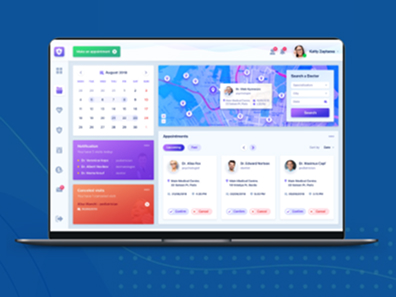
Selected moments from the shipped HealthShield platform—where document submission, verification, membership access, and administration come together for healthcare credentialing teams.




Core Features & Functional Capabilities
Built For Membership-Driven Credentialing
- Multi-Membership Access Control: The platform supports multiple user roles with role-based permissions that regulate access to data, actions, and interface components across membership tiers.
- Centralized Data Management: Employee, employer, and document records are managed within a unified system, ensuring consistent updates and reliable retrieval across all entities.
- Secure Document Management: Documents are processed with validation checks during upload, stored securely, and accessed only through permission-based controls tied to user roles.
- Submission & Verification Workflow: The system supports structured document submission, status tracking, and multi-step approval logic. This ensures only verified data progresses through the workflow.
- Automated Resume Generation: User data is transformed into standardized resume formats using predefined rules, enabling consistent output without manual formatting.
- Administrative Control Panel: A centralized admin interface enables user management, submission review, access control, and system monitoring through structured operational controls.
Technologies and Tech Stack We Used
WordPress Extended With Custom Server-Side Logic
Core workflows, data relationships, and business logic were built through custom development. This hybrid architecture enabled rapid WordPress deployment while exposing custom backend logic that traditional SaaS credentialing platforms do not.
WordPress
CMS foundation extended with custom server-side development.
MemberPress
Multi-tier membership with role-specific capabilities.
Advanced Custom Fields (ACF)
Custom dashboards and structured entity data.
Mailchimp
User capture, segmentation, and automated email workflows.
Testing & Quality Assurance
Validated For Roles, Workflows & Compliance
- Functional testing covered uploads (file type + access control), roles, membership rules, and form validation.
- Validation testing ensured input integrity, file restrictions, and correct workflow status transitions.
- System testing verified dashboards, resume generation, email triggers (Mailchimp), and edge cases.
- Cross-device testing ensured responsive, usable experiences across devices and screen sizes.
Our Approach & Development Timeline
Focused Delivery Across 8 Weeks
The timeline reflects a focused scope, clearly defined requirements, and iterative delivery, leveraging pre-built frameworks to accelerate development.
Requirement Analysis & Workflow Mapping
Defined entities, roles, and approval flows.
System Architecture & Data Structure Setup
Core data model and relationship design.
Membership Configuration & Role Definition
MemberPress tiers and access rules.
Dashboard Development
Employee & employer interfaces.
Document Management & Verification Workflow
Upload, approval, and lifecycle tracking.
Email Integration, Testing & Final Deployment
Mailchimp integration and polish.
Measurable Outcomes
Faster Onboarding With Fewer Delays & Duplicates
Digisoft Solution designed and implemented a structured, role-driven workflow that replaces fragmented credentialing. By combining controlled data storage, defined verification states, and automated document handling, it reduces manual effort and eliminates inconsistencies.
Faster document processing and retrieval vs earlier manual workflows
Faster onboarding cycles across users and teams
Fewer duplicate submissions due to better validation and tracking
Reduction in manual effort in day-to-day operations
MoreThe result is a reliable system that maintains data accuracy, access control, and process consistency under real operational use.