Scriveiner: Transforming Luxury Writing Into a Seamless Digital Experience








About The Client
Scriveiner
- IndustryLuxury Writing Instruments
- RegionLondon
- PlatformShopify
- Delivery4 Months (Ongoing Maintenance)
Scriveiner is a British luxury pen company founded in London in 2019. The brand produces fountain, rollerball, and ballpoint pens designed for professionals, collectors, and gifting customers.
The company integrates British-inspired design with German Schmidt components to produce high-quality writing instruments. The brand operates between traditional luxury pen manufacturers and mass-market stationery brands, positioning itself as an accessible premium alternative.
Scriveiner places strong importance on writing quality, presentation standards, packaging consistency, and long-term product reliability. Its catalog emphasizes premium materials, formal aesthetics, and gift-oriented presentation.
Project Overview
Structured Luxury Commerce For Discovery, Variants & Gifting
As Scriveiner’s catalog expanded across multiple pen collections, finishes, and writing formats, the Shopify storefront became increasingly difficult to navigate, requiring a more structured information architecture and improved filtering and product discovery.
Digisoft Solution restructured the storefront while preserving its premium experience. This was achieved by redesigning the collection architecture to use a structured taxonomy, supported by automated tagging rules and manual collection mapping. To optimize Shopify’s native variant structure and reduce catalog bloat, product attributes such as finish, mechanism, and packaging were normalized using structured metafields.
We used a hybrid sibling-product architecture in which metafields served as relational links between separate Shopify product records, enabling a unified product configuration experience on the frontend. Region-aware pricing, multi-currency support, and cart-level gift grouping were also implemented.
The Concept
Premium Storytelling With Structured Product Discovery
The storefront was built using Shopify OS 2.0 section-based templates with modular blocks to ensure consistent product storytelling across PDPs and collection pages. Each product page followed a consistent layout with fixed sections for specifications, materials, finishes, writing mechanisms, and visual media, improving clarity and scanability.
Collection pages used structured category segmentation combined with filter-based navigation to support faster discovery without heavy promotional clutter. Performance was optimized using native image lazy loading (loading="lazy") and responsive Shopify CDN delivery with WebP-enabled srcset.
Fixed aspect-ratio containers were used to reduce cumulative layout shift (CLS), ensuring smooth, consistent browsing across desktop and mobile devices.
Key Challenges Addressed
A Growing Catalog Required Control Over Structure, Variants & Performance
Multi-Layer Product Organization
Managing relationships across pen types, finishes, materials, colors, and series required a structured data model to prevent catalog fragmentation and duplicate browsing paths. Product structure was standardized across products, variants, and collection assignments. Metafield attributes were used to maintain consistent classification across the storefront.
Product Discovery Across Large Collections
Product discovery improved through restructuring the collection hierarchy and implementing tag-based filtering combined with metafield-driven attributes. This reduced navigation complexity, streamlining the browsing flow toward a faster collection-to-product path.
Variant Structure Management
Shopify variant constraints were addressed by consolidating SKU structures and compressing option sets, while shifting attributes such as finish, writing type, and packaging into metafields and structured grouping logic. This reduced variant fragmentation and preserved inventory consistency across product configurations.
Performance Across Media-Heavy Pages
Maintaining performance across image-heavy PDPs required optimizing rendering priority, asset delivery, and layout stability. This ensures consistent interactions despite high-resolution media.
Gifting and Direct Purchase Experience
The storefront was designed to support both gifting and direct purchase workflows within a single product architecture. This ensures that additional purchase context (such as gift intent) does not interfere with core cart and checkout behavior.
International Browsing and Checkout Stability
The system was designed to ensure consistent product visibility, pricing behavior, and checkout reliability across regions, devices, and traffic conditions while maintaining storefront responsiveness under variable network performance.
Technical Solutions We Implemented
Catalog Architecture For Premium Shopify Commerce
Structured collection mapping, variant standardization, dynamic OS 2.0 templates, and performance optimization—delivering a high-trust luxury browsing and checkout experience.
Catalog Structuring and Collection Mapping
We rebuilt the Shopify product organization using a structured mapping model that reorganized collections, tags, and product assignments. This supports scalable indexing across pen types, finishes, materials, and series. Metafields were used to standardize attribute storage outside of variant structures.
Variant Configuration Standardization
Variant structures were standardized by consolidating SKU-level configurations. Product attributes such as writing format, finish, and color variations were managed through structured metafields and grouping logic to ensure consistent inventory alignment and pricing accuracy.
Navigation System Restructuring
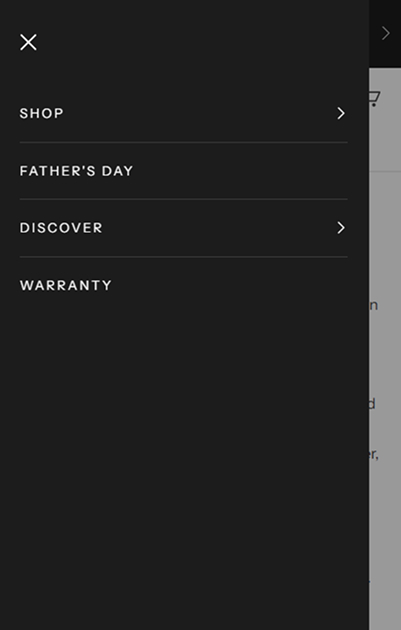
We redesigned navigation into a hierarchical product structure model. This enabled structured browsing across collections and sub-collections. A refined breadcrumb system was implemented to support clear user traversal from collection → sub-collection → product detail page, improving orientation and reducing navigation friction.
Dynamic Product Template Development
Reusable Shopify OS 2.0 product templates were built using modular sections to render specifications, accessories, packaging details, and media components. This decoupled content structure from templates, enabling scalable product page configuration without code duplication.
Media Loading and Asset Optimization
Media performance was optimized through prioritized asset loading, responsive image delivery via Shopify CDN using WebP-enabled srcset, and layout stability control using fixed aspect-ratio containers. This reduced layout shifts and improved perceived load performance on PDPs and collections.
Responsive Interface Engineering
Frontend layout systems were optimized using adaptive grid structures, responsive breakpoints, and touch-friendly spacing rules. This ensured consistent interaction behavior across desktop, tablet, and mobile resolutions.
Cart & Checkout State Management
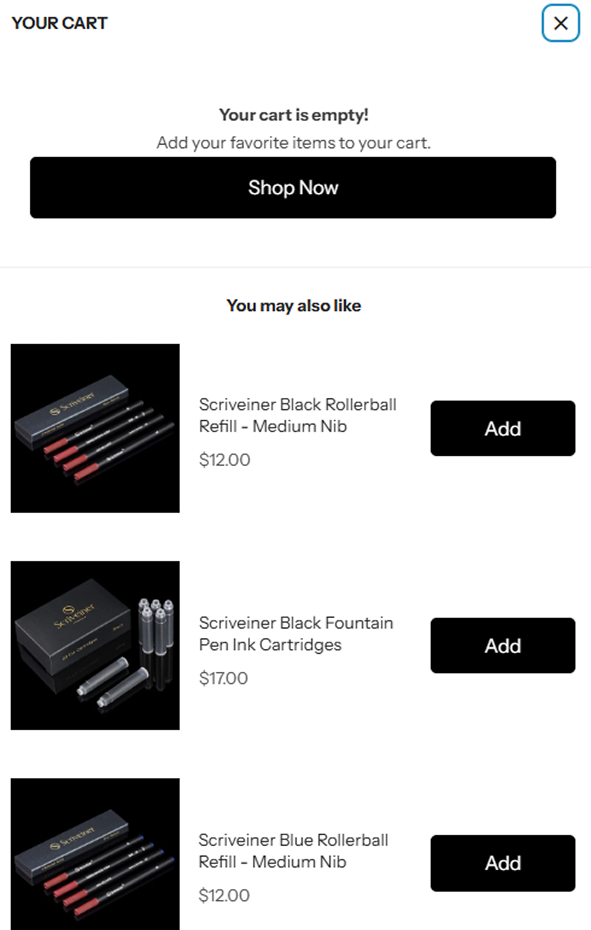
Cart state was managed using the Shopify AJAX Cart API with line-item properties for gifting and bundling. The checkout state remained fully Shopify-controlled, with synchronization handled via event-driven cart updates rather than custom checkout manipulation.
Regional Pricing Synchronization
Localized pricing and currency behavior were standardized using Shopify’s native multi-currency system. We ensured consistent pricing visibility between product pages, cart calculations, and checkout flows across supported regions.
Screens From the Live Build
Surfaces We Designed & Engineered Into Production
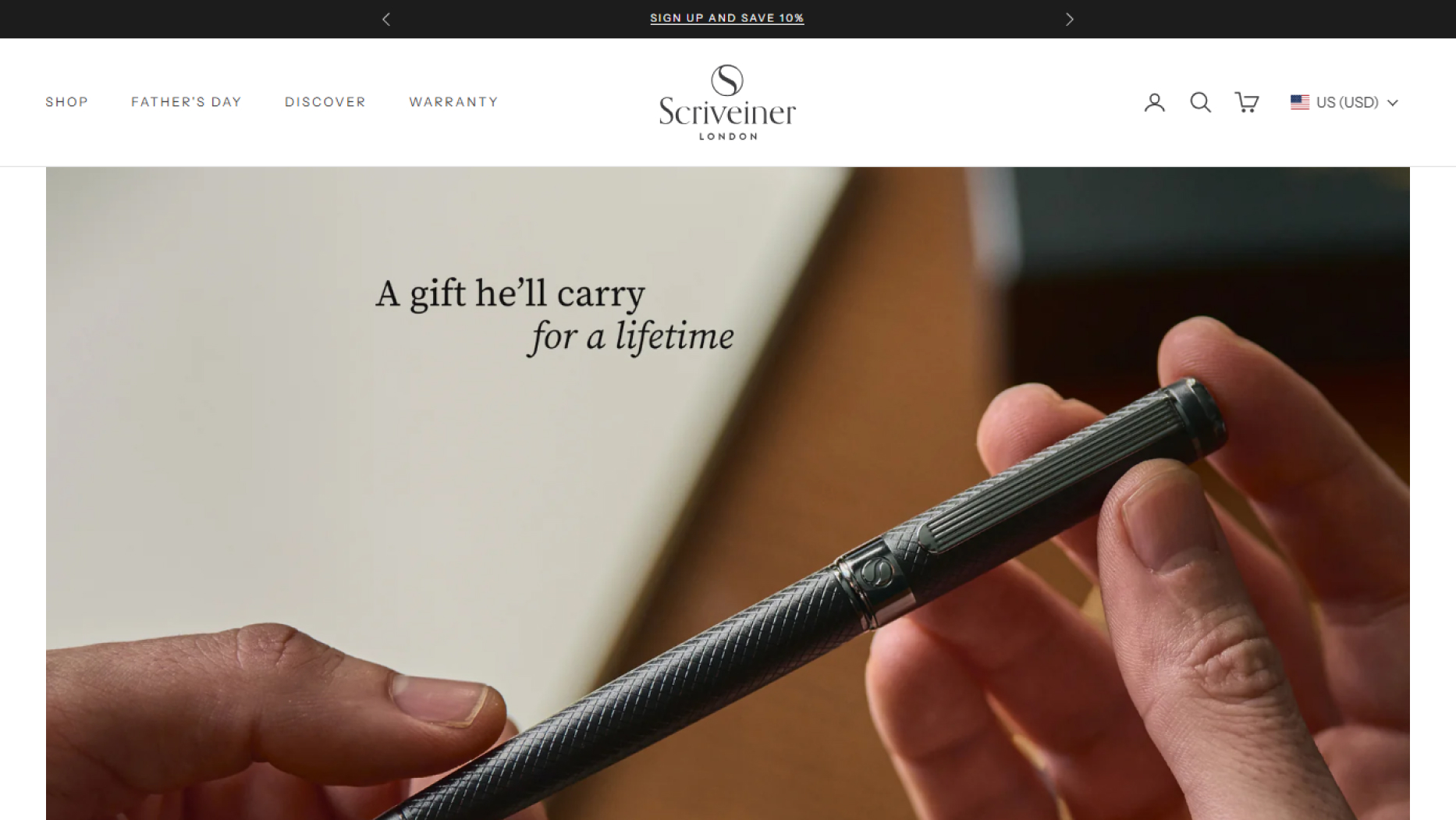
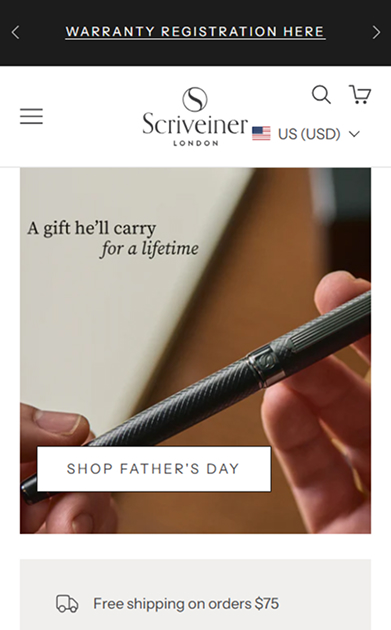
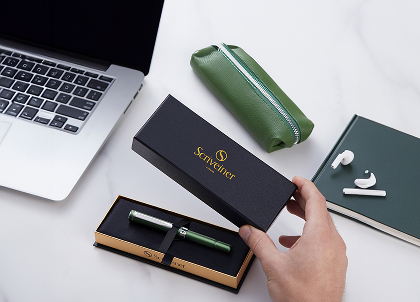
Selected moments from the Scriveiner Shopify storefront—where luxury product discovery, structured collections, premium PDPs, and high-trust checkout flows come together.


Core Features & Functionalities
Designed For Premium Pen Commerce
- Categorized Product Browsing: Customers can access products through categorized browsing sections organized by pen types, signature collections, finishes, color variations, featured products, and new arrivals, enabling clear category-based navigation across the catalog.
- Unified Product Selection: Product selection is powered by variant-based dynamic rendering, with real-time updates to pricing and imagery using Shopify’s AJAX Cart API. This ensures a consistent selection experience across all configurations within a single interface.
- Organized Product Information: Each product page presents a hierarchy of specifications, performance details, packaging, and refill compatibility. Supported by imagery to improve product evaluation clarity.
- Gifting and Corporate Purchase Support: The storefront supports gifting and corporate buying through dedicated collections, gift card options, and packaging-focused product presentation. This enables both personal and business purchase journeys within the same system.
- International Shopping Experience: Customers can browse and complete purchases in supported regional currencies, with consistent pricing visibility maintained across product pages, the cart, and checkout to ensure stable international purchasing behavior.
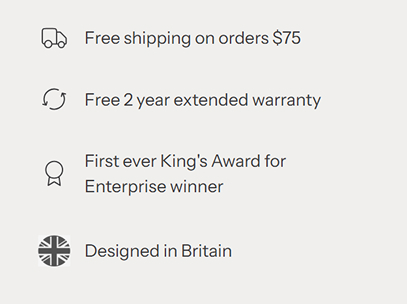
- Purchase Confidence Elements: Trust signals such as customer reviews, award references, shipping information, and regional availability indicators are integrated at key decision points using metafield-driven conditional rendering at the template level to support informed purchase decisions.
- Cross-Device Storefront Accessibility: The storefront maintains consistent browsing, product visibility, cart functionality, and checkout behavior across desktop, tablet, and mobile devices through a responsive layout system optimized for uniform interaction across breakpoints.
Technologies We Used
A Focused Stack For Luxury Shopify Commerce
Built on Shopify Online Store 2.0 with structured metafields, modular theme sections, and performance-first delivery—supporting premium product discovery, variant logic, and international checkout without custom backend infrastructure.
Frontend Layer
Shopify Theme System Layer
ComData & Architecture Layer
Performance & Delivery Layer
Analytics & Tracking
Hosting & Infrastructure
Testing & Quality Assurance
Validated For Discovery, Variants & Checkout
- Product filtering, collection hierarchy, and category navigation were reviewed across multiple browsing paths and product variations.
- The variant selection flow was validated for correct alignment between pricing, product imagery, inventory status, and configuration changes.
- Responsive behavior remained consistent across desktop, tablet, and mobile devices during navigation and purchase journeys.
- Image rendering, asset loading, and layout stability were assessed across media-heavy product and collection pages.
- Multi-currency display and checkout continuity were maintained across international purchase scenarios without pricing inconsistencies.
- Cart operations and checkout flow progression were checked for uninterrupted updates during product changes, quantity adjustments, and final purchase steps.
Our Development Approach & Timeline
Phased Delivery Across 4 Months
The implementation followed a phased approach—structuring catalog architecture first, then building OS 2.0 templates, integrating variants and collections, and optimizing performance before launch with ongoing maintenance.
Requirement Analysis & System Planning
Commerce goals, catalog taxonomy, and Shopify architecture specification.
Information Architecture & Store Structure Design
Collection hierarchy, navigation model, and metafield schema design.
Shopify Theme Development & Core Implementation
OS 2.0 modular templates and responsive storefront foundation.
Product, Variant & Collection Integration
Catalog mapping, sibling-product linking, and AJAX cart workflows.
UI Refinement, Performance Optimization & Responsive Enhancements
Media optimization, CLS reduction, and mobile checkout improvements.
Quality Assurance, Deployment & Ongoing Maintenance
End-to-end validation, launch, and continuous storefront support.
Measurable Outcomes
Commerce Gains From Structured Shopify Delivery
Metrics are based on GA4 funnel comparison between two 90-day periods (pre- and post-implementation).
Conversion rate (up from 1.8%)
Mobile checkout completion (up from 41%)
Average order completion time (down from 4.6 minutes)
Cross-sell attachment rate for refills & accessories (up from 12%)
The final implementation stabilized product configuration and checkout behavior across devices, reducing drop-offs caused by system inconsistencies. It also simplified the path from product selection to order completion, resulting in more consistent performance across mobile and desktop sessions and fewer support-related order issues.