Laundry University: Transforming the Art of Laundry into an Interactive eLearning Experience









About Our Client
Laundry University
- IndustryLaundry & Textile Services (Professional Training)
- RegionUnited States
- PlatformOnline Learning Platform (LMS-based training)
- Delivery2 months
Laundry University provides structured training for laundry operations, targeting laundromat operators, hospitality businesses, and industrial facilities. The organization aimed to replace manual, in-person training with a standardized digital system to improve consistency and accessibility across locations.
The requirement was to deliver structured, role-based learning content that is easy to navigate and supports users with varying levels of experience.
Project Overview
Standardized Laundry Training Through A Structured Digital LMS
Laundry University is an online training platform designed to standardize skill development for laundry operations. It provides structured courses covering production workflows, equipment handling, stain treatment methods, and quality control procedures used in commercial laundry environments.
Learning content is optimized into video lessons supported by quizzes and downloadable reference guides for offline use. The platform enables role-based learning paths for new staff, supervisors, and business owners. It supports multi-device access through a web-based interface with progress tracking and certification output.
The system uses LearnDash custom post types for course structure, while progression and completion are managed via LearnDash activity tables and WordPress user meta.
The client faced challenges with inconsistent training delivery, manual enrollment processes, and limited scalability across locations. Existing in-person methods made it difficult to standardize learning outcomes and track user progress effectively.
The Concept
A WordPress LMS With Event-Driven Plugin Integration
Laundry University is a web-based LMS built on a WordPress architecture. It centralizes the training, assessment, and certification workflows for laundry operations. LearnDash, WooCommerce, and membership systems are integrated as modular plugins within a unified platform.
Workflows are coordinated through WordPress hooks and plugin-based triggers. This enables automated, real-time enrollment, access control, and certification without manual intervention. User access, progress tracking, and certification states are stored in WordPress core tables and metadata.
A modular architecture where LMS, membership, and commerce layers stay synchronized through hooks—eliminating manual enrollment and inconsistent training delivery.

Key Challenges Addressed
Bridging Gaps Between Memberships, LMS & Certificates
Membership-Based Course Access
The platform required controlled access aligned with membership tiers, but standard LearnDash and MemberPress integrations did not fully support the required dynamic synchronization between membership tiers and courses. This required a custom hook-based access control system using add_action hooks and user metadata.
Custom Certificate Generation
The system required dynamic certificate generation with fixed layouts, but E2PDF does not support runtime conditional field mapping or dynamic data binding. This required custom field binding and template overrides using custom E2PDF field mappings and WordPress action hooks.
Course Progress and Completion Flow
LearnDash course completion events were handled via WordPress action hooks. Custom orchestration was implemented for certificate generation workflows. This required custom action hooks to align completion state with certificate generation.
Administrative and User Workflow Automation
The system required automated enrollment, tracking, and certification, but WordPress does not provide unified workflows across LMS and membership systems. This required custom automation using hooks, scheduled events, and backend synchronization.
Technical Solutions We Implemented
Modular WordPress Architecture With Hook-Based Synchronization
A modular WordPress architecture was implemented, with LMS, membership, and commerce layers integrated via hooks to enable event-driven synchronization.
Extended Plugin-Based Architecture
An event-driven integration layer enables near-real-time synchronization across LMS, membership, and commerce systems. Optimized user data ensures consistent access control and conditional course visibility across integrated plugins.
Custom Certificate Generation System
E2PDF templates with dynamic field mapping generate certificates automatically upon course completion events. This enables automated PDF generation without manual processing.
Automated Course Access and Progress Flow
Payment, enrollment, and progress are aligned through WooCommerce triggers that activate membership via MemberPress. LearnDash uses user meta and completion events to manage access and certificate eligibility.
Unified User & Admin Control
To reduce manual effort, admin workflows run via WordPress dashboards with hooks and meta fields. Automation and WP-Cron jobs were implemented for scheduled synchronization and retry handling.
Screens From the Live Build
Surfaces We Designed & Engineered Into Production
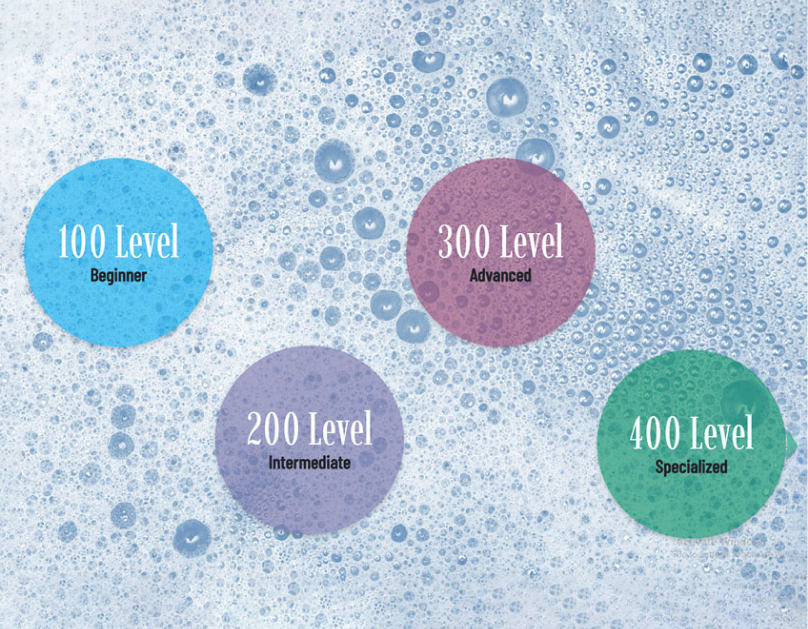
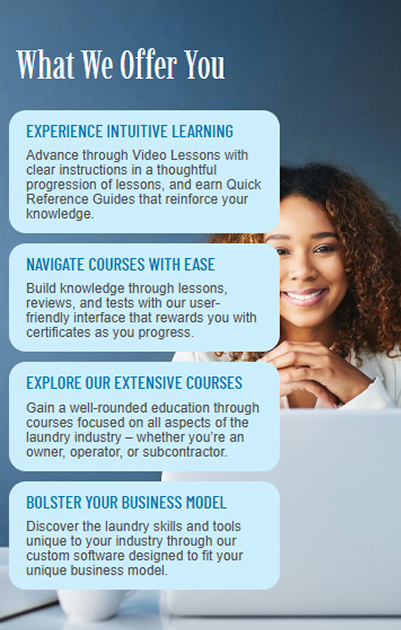
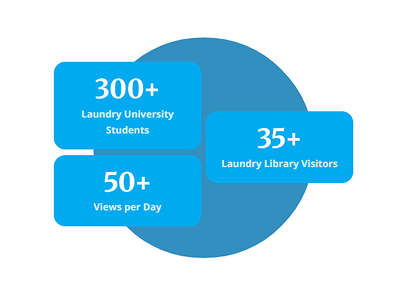
Selected moments from the shipped Laundry University platform where courses, memberships, progress tracking, and certifications come together for professional laundry training.


Core Features & Functional Capabilities
Built For Structured Laundry Training
- Responsive Interface and Navigation: The front-end uses reusable WordPress blocks with responsive layouts. Media loads conditionally based on the device. Navigation continuity was maintained through client-side state persistence and authenticated progress retrieval.
- Sequential Course Progression (LearnDash): Courses follow a structured sequence of lessons, quizzes, and checkpoints using LearnDash progression rules. User progress is stored in LearnDash activity tables, with quiz results and completion logic controlling advancement.
- Membership-Based Course Access Control: We controlled access through MemberPress membership tiers mapped to users. WooCommerce order events were integrated with MemberPress membership activation using custom automation workflows.
- User Progress Tracking and Data Storage: User activity, including lessons, quizzes, and enrollments, is stored in LearnDash activity tables and WordPress user meta. Progress updates are reflected in dashboards based on real-time completion events.
- Certificate Generation and Validation: Certificates are generated after validating course completion conditions. The ld_course_completed trigger initiates certificate generation, passing user and course data into E2PDF templates for PDF output.
- Payment Processing and Access Updates: We processed payments through WooCommerce, with order completion triggering membership activation in MemberPress. Access rules are updated based on transaction status and linked to LearnDash course availability.
- Content and Quiz Management: Course content and quizzes are managed via WordPress admin interfaces using custom post types and structured database updates. Quiz attempts and discussion entries are linked to course data for consistent tracking.
Technologies and Tech Stack We Used
Tools Chosen For LMS Scale & Automation
WooCommerce, MemberPress, and LearnDash are integrated through a custom hook-based synchronization layer. This enables order-to-membership-to-course access mapping without manual intervention.
WordPress
Primary Application Framework
LearnDash
Course Delivery, Lessons, Quizzes, Progression Tracking
MemberPress
Subscription management and access rules for courses
WooCommerce · Stripe
Order Processing and Transactional Layer. Payment Gateway For Secure Transactions
Divi Builder · Custom Student Dashboard
Page And Layout Design. Role-Based Learner Interface
Custom PHP plugins
System Integration And Workflow Automation
E2PDF
Certificate Generation And Export
bbPress
Discussion Forums And Learner Interaction
Testing & Quality Assurance
Validated Across Enrollment, Progress & Certificates
- Verified LMS workflows, including enrollment, course progression, quizzes, and certificate generation across user roles.
- Validated WooCommerce payment flow from purchase to automatic course access assignment and user mapping.
- Tested role-based access control across free users, paid users, and administrators.
- Performed cross-browser and responsive testing across mobile, tablet, and desktop devices.
- Checked data persistence, session handling, and recovery after reloads or logout.
- Conducted integration testing across LMS, WooCommerce, and custom plugins, including fallback validation for enrollment-state mismatches via WP-Cron.
- Included fallback reconciliation via WP-Cron to resolve enrollment-state mismatches between WooCommerce and LearnDash.
Our Approach & Development Timeline
Phased Delivery Across 8 Weeks
Requirements, integration, custom plugins, frontend templates, testing, and deployment—delivered in a focused two-month timeline.
Requirements & LMS Workflow Design
User roles, course flows, and integration mapping.
WordPress Setup & LMS–WooCommerce Integration
Core platform, LearnDash, and commerce layer.
Custom PHP Plugin Development
Access control and enrollment logic.
Frontend Templates & JavaScript
Learner dashboards and UI enhancements.
Functional & Integration Testing
Cross-plugin validation and QA.
Deployment & Performance
Caching, optimization, and go-live.
Measurable Outcomes
Automated Training At Operational Scale
This project demonstrates how a structured LMS architecture, combined with deep WooCommerce integration, can transform manual training and enrollment into an automated digital learning system.
Reduction in enrollment time via automated WooCommerce–LMS integration
Automated order-to-course activation with no manual intervention
Enrollment accuracy through synchronized WooCommerce–LMS data mapping
Dashboard performance using AJAX-based updates and reduced full-page reloads
This project demonstrates how a structured LMS architecture, combined with deep WooCommerce integration, can transform a manual training and enrollment process into an automated digital learning system that requires less manual intervention.
Digisoft Solution delivered a stable, scalable, and maintainable platform through custom workflow mapping, plugin-level development, and performance-focused implementation. This streamlines course delivery and improves operational efficiency and ensures a consistent user experience across all learning stages.