FILMD: Transforming Film Production Into a Connected Digital Experience







About The Client
FilmD
- IndustryFilmTech / Media & Entertainment
- RegionUnited Kingdom
- PlatformCustom SaaS Platform
- Delivery4 years
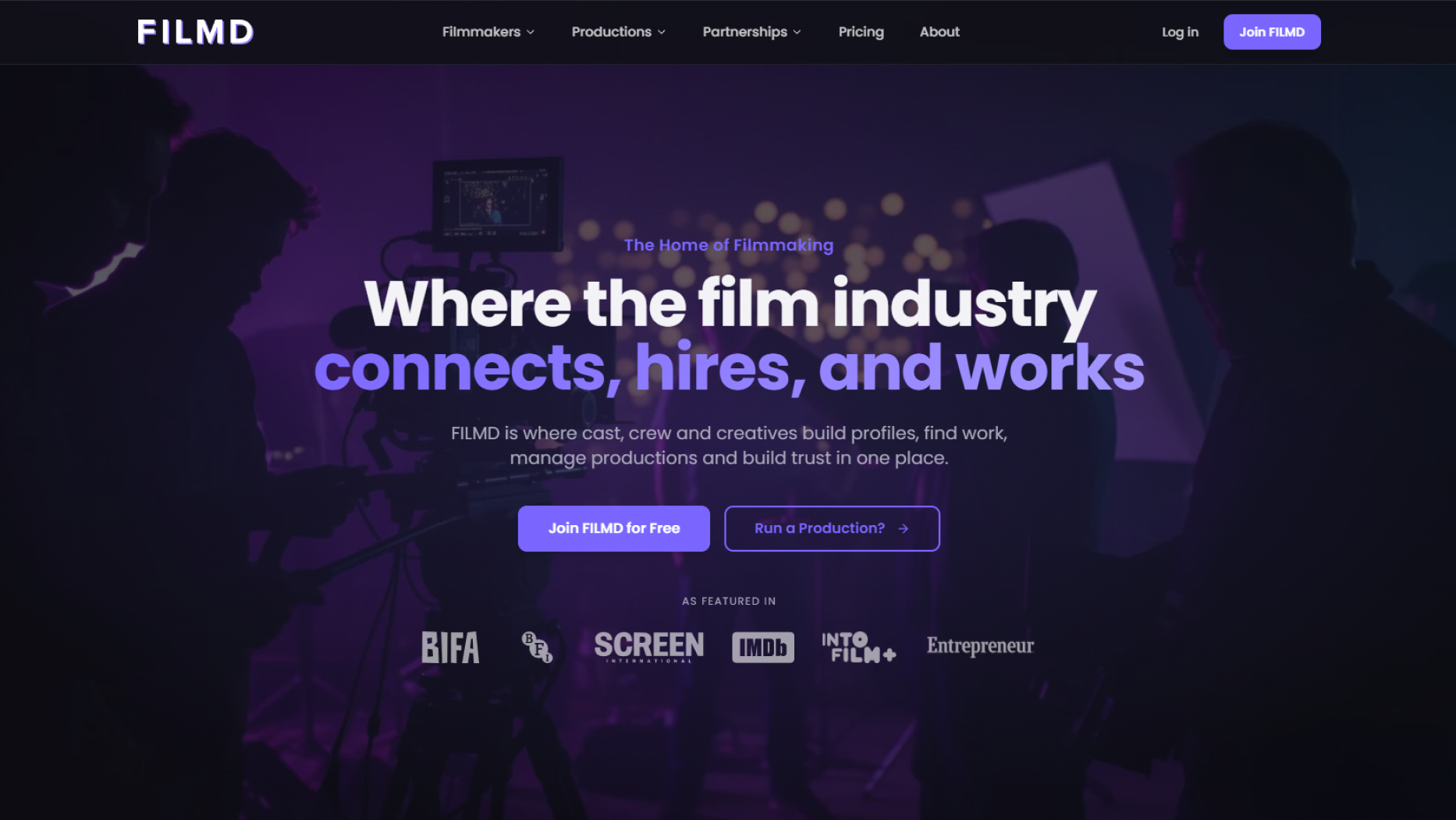
FilmD is a digital platform that enables film production teams, cast members, and independent filmmakers to manage production-related activities through a structured online system.
The platform enables profile creation, production listings, recruitment processes, media uploads, and multi-role communication within the film industry. It is designed to handle large volumes of production data, maintain structured user interactions, and support secure access to shared resources.
It was intended to simplify production administration and provide a more structured approach to managing production-related operations across different stages of filmmaking.
Project Overview
Unified Production Workflows For Filmmakers, Cast & Crew
Independent film production workflows were fragmented across messaging applications, spreadsheets, casting platforms, and disconnected operational tools. This led to inconsistent communication, inefficient file tracking, and gaps in coordination across production teams.
As production scaled, these issues began to affect end-to-end visibility and slow collaboration among stakeholders. There was a clear need for a unified digital environment to consolidate production workflows, standardize collaboration, and improve visibility across users, roles, and project stages.
Digisoft Solution was engaged to design and engineer a centralized production platform. The objective was to convert disconnected workflows into a structured system. This aligns operations across filmmakers, actors, crew members, and production companies within a single ecosystem.
The Concept
A Unified Production Environment For Every Role
The project aimed to define a unified production environment that brings together filmmakers, actors, crew members, and production companies within a structured operational workflow.
The system was designed to structure interactions between user roles, production listings, applications, and internal collaboration channels. This structure enables a more organized approach to managing production activities and participant engagement.
Data relationships between users, productions, and submissions were conceptualized to support structured workflow continuity. This ensures consistency across production stages and workflow transitions.
Key Challenges Addressed
Scaling Production Required Control Over Real-Time, Data & Access
Real-Time Communication Stability Under Load
The platform experienced instability in the real-time communication layer powered by SignalR during increased concurrent activity. Persistent client connections were not consistently maintained during high-traffic conditions. This resulted in delayed event delivery, interrupted messaging flows, and unreliable live production updates.
Session Management Across Distributed Environments
Maintaining session consistency across multiple application instances behind a load balancer required a distributed synchronization mechanism. Instead of relying on instance-bound state or sticky sessions, a Redis-backed distributed cache and pub/sub layer were used to synchronize connection metadata and SignalR event routing across nodes. This ensured continuity of real-time communication and consistent delivery of messages across horizontally scaled servers.
Complex Relational Data Dependencies
The system used a normalized relational schema to manage high-dependency relationships between productions, users, applications, messages, and media assets. Indexed foreign key relationships were optimized for join-heavy queries, while transactional integrity ensured consistency across concurrent updates in production workflows.
Secure File Processing and Controlled Access
Production documents, scripts, and media assets were handled through a controlled file pipeline. It included validation rules, structured storage, and permission-based access control. Files were isolated by production scope and user role to ensure secure retrieval and prevent unauthorized access.
Role-Based Access and Permission Control
Different platform users required separate levels of access across production operations, communication tools, and administrative controls. Maintaining accurate permission boundaries between production owners, crew members, applicants, and collaborators created additional backend access-control challenges.
Cross-Device Operational Consistency
The platform needed to ensure consistent behavior across desktop and mobile environments under varying network conditions. Differences in device behavior, connection reliability, and session continuity affected the consistency of production-related operations across active user sessions.
Technical Solutions We Implemented
Distributed Real-Time Architecture For Reliable Production Operations
SignalR, Redis backplane synchronization, and RBAC were combined to deliver stable messaging, session continuity, and secure multi-role production workflows at scale.
Distributed Real-Time Communication Handling
SignalR was used to enable persistent bidirectional communication for notifications, messaging, and live production updates between clients and the server. Client-side automatic reconnection ensured connection resilience. To support horizontal scaling across multiple application instances, a Redis backplane was introduced to synchronize SignalR messages and connection events. This ensures consistent propagation of real-time updates under concurrent load.
Redis Backplane for Multi-Server Synchronization
A Redis-based backplane synchronized SignalR events across multiple application instances. This enables real-time messaging, connection state management, and notification delivery. The pub/sub layer enabled seamless event propagation across server nodes, reducing routing inconsistencies under high traffic in a distributed environment.
Relational Data Structure Optimization
The database schema was normalized to reduce redundancy across production, user, and application entities. Indexed relational mappings were implemented between productions, submissions, messages, and media assets to optimize join-heavy queries and improve retrieval performance under concurrent workloads.
Secure File Storage and Access Management
We processed production documents, scripts, and media assets through a controlled upload-and-retrieval pipeline. This incorporated validation rules, structured storage allocation, and role-based access enforcement. File isolation ensured that assets were scoped to each production and were accessible only to authorized roles.
Role-Based Permission Architecture
Role-based access control (RBAC) was implemented using policy-based authorization with claims-driven identity validation at the middleware layer. Access decisions were evaluated against production-level roles (e.g., owner, crew, applicant). This ensures fine-grained control over messaging, document access, and administrative operations.
Cross-Device Session Continuity
We achieved cross-device session continuity by combining token-based authentication with Redis-based distributed state tracking for ephemeral session metadata. This allowed active session validation, reconnection handling, and continuity of real-time workflows across devices without relying on server affinity.
Why It Works Better
Layered Architecture For High-Volume Production
We followed a layered, distributed architecture, separating the presentation, application services, data persistence, and real-time communication layers. This reduced coupling between high-frequency messaging workloads and core transactional operations, ensuring predictable system behavior under concurrency.
- This separation reduces coupling between transactional operations and high-frequency messaging workloads.
- Real-time interactions are handled independently through SignalR with distributed synchronization via Redis.
- File storage operates as an isolated subsystem to prevent performance impact on core application services.
- Role-based access enforcement ensures secure and context-aware authorization across all workflows.
Screens From the Live Build
Surfaces We Designed & Engineered Into Production
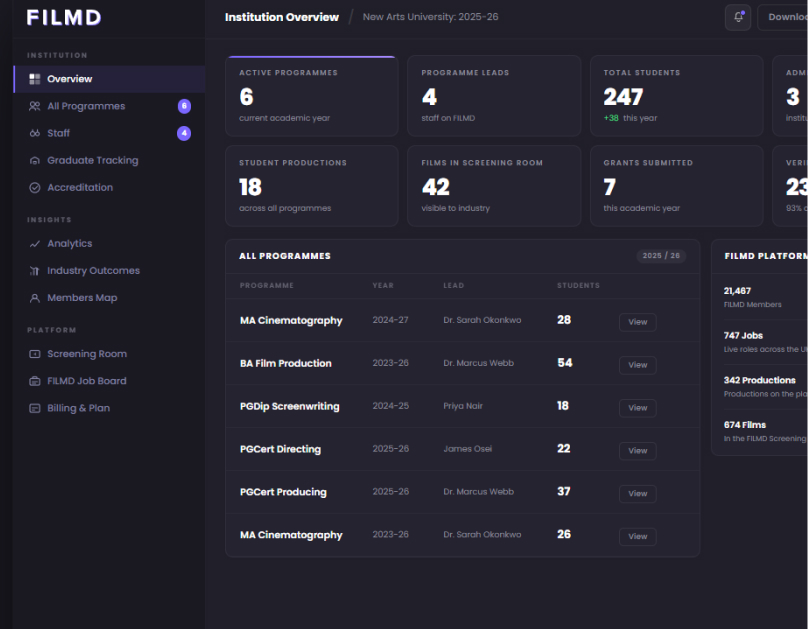
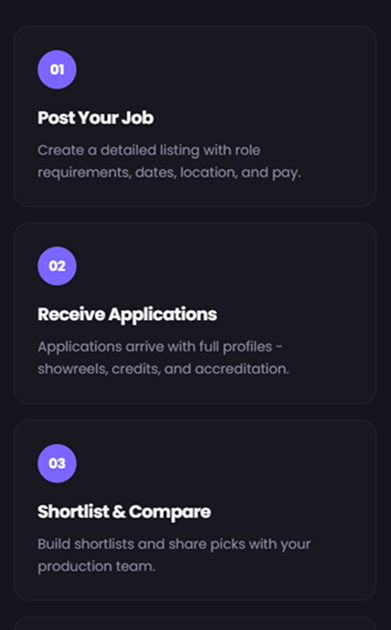
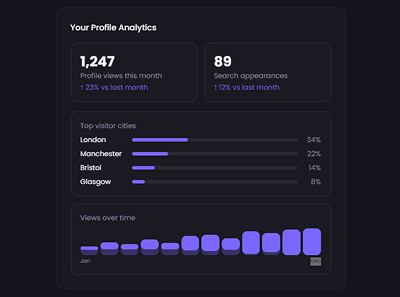
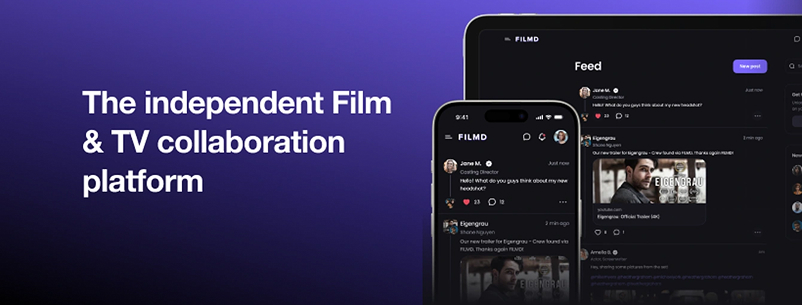
Selected moments from the shipped FILMD platform—where casting, crew collaboration, messaging, and production administration come together across web and mobile experiences.
Core Features & Functionalities
Designed For End-to-End Production Operations
- Multi-Role User Profiles: The platform supports separate profile structures for filmmakers, production companies, actors, crew members, and collaborators. User accounts include portfolio information, production history, professional details, skill categorization, and participation records linked to active productions.
- Production Creation and Administration: Production teams can create and manage project listings containing casting requirements, crew requirements, schedules, production details, attached resources, and participant information. Administrative interfaces allow production owners to organize production-related activities from centralized dashboards.
- Casting and Crew Submission System: Actors and crew members can apply directly to production opportunities through structured submission flows. Production teams can review applications, organize candidate records, manage participation requests, and track submission activity within production-specific environments.
- Direct Messaging and Activity Notifications: The system supports user-to-user messaging, production-related communication, and operational notifications connected to applications, assignments, production updates, and account activity. Notification flows help users remain updated on ongoing production interactions.
- Media and Document Management: Users can upload, organize, and access production-related files, including scripts, images, call sheets, and supporting documents. File resources are grouped within production environments to simplify document access and operational coordination.
- Role-Specific Operational Access: Different user types have access to platform functions based on their responsibilities within productions. Administrative actions, production controls, participant management, document visibility, and communication access vary depending on the assigned operational role.
- Responsive Cross-Device Accessibility: The application interface remains accessible across desktop, tablet, and mobile devices. Users can continue production-related activities, communication tasks, and account operations across different screen sizes and device environments.
- Production Activity Monitoring: Production teams can monitor operational activity, including application records, participant updates, assignment changes, communication history, and production-related interactions, through centralized activity tracking interfaces.
Technologies and Tech Stack We Used
Tools Chosen For Scale & Real-Time Performance
Vue.js
Responsive production interfaces across desktop, tablet, and mobile devices.
ASP.NET Core(.NET 6) · C#
Core production services, APIs, RBAC, and transactional workflow operations.
SignalR
Live messaging and production updates with auto-reconnection.
Microsoft SQL Server
Relational data storage for productions, users, and media assets.
Redis
Cross-server session sync and SignalR backplane coordination.
Google Maps APIs
Location-based filtering for crew and casting opportunities.
Testing & Quality Assurance
Validated For Reliability, Access & Scale
Performance improvements were validated using APM dashboards, server logs, and controlled load testing environments across messaging, synchronization, and production workflows.
- Real-time messaging and notification delivery were checked during concurrent user activity across multiple active sessions.
- SignalR connection recovery and session continuity were tested under unstable network conditions.
- Redis backplane synchronization across distributed server environments was monitored during high-traffic conditions.
- Database transaction consistency was validated for production management, application handling, and communication operations.
- Role-based access permissions were reviewed across administrators, production owners, crew members, and applicants.
- Responsive operation and session behavior were examined across desktop, tablet, and mobile devices.
Our Approach & Development Timeline
Phased Delivery Across 4 Years
The implementation followed a phased delivery approach—building a stable foundation first, then incrementally adding real-time communication, access control, and production-scale optimization.
Requirement Analysis & System Structure Definition
System structure definition and production workflow specification.
System Architecture & Data Modeling
Relational schema design and distributed system architecture.
Core Backend & Feature Development
Production APIs, listings, applications, and core feature modules.
Role Management & Access Control Implementation
RBAC implementation and permission enforcement across workflows.
Real-Time & Data Synchronization Integration
SignalR integration and Redis backplane synchronization.
Performance Optimization & Stabilization
Performance tuning, load testing, and production stabilization.
Measurable Outcomes
Production-Grade Performance At High Concurrent Usage
Performance improvements were validated using APM dashboards, server logs, and controlled load testing environments. Key system-level enhancements included reduced operational latency in production workflows. This improved the reliability of real-time messaging under concurrent load and increased system throughput across file and application processing pipelines.
Casting & crew connection time (down from 3–5 days)
Real-time message delivery reliability (up from 70%)
Data retrieval time (down from 2.5–3.2 seconds)
Stable concurrent users (up from 200–300)
The platform was designed to handle real operational load with an emphasis on consistent performance under concurrent usage. The system architecture supported structured backend operations, real-time communication handling, and distributed data synchronization to maintain data consistency across active sessions.
Priority was given to reliability, controlled access across multiple user roles, and stable performance during continuous production. This ensured the system could operate effectively at scale and under high interaction volumes.