AddressTwo: Simplifying Customer Relationships with a Smarter CRM Built for Businesses








About The Client
AddressTwo
- IndustryCRM / Marketing Automation
- RegionUnited States
- PlatformWeb-Based SaaS CRM Platform
- Delivery2 years
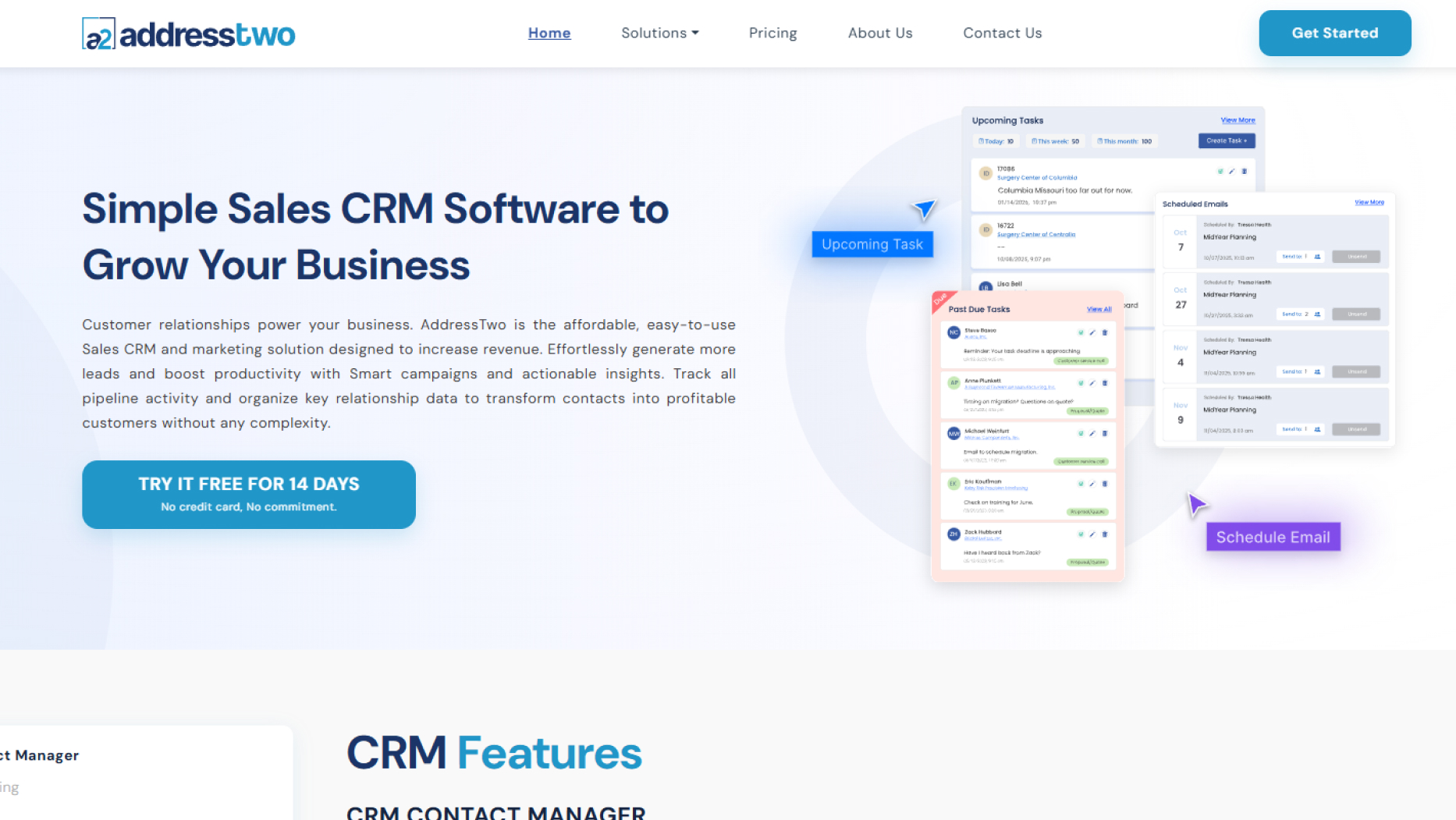
AddressTwo is a CRM solutions provider offering a cloud-based customer relationship management platform designed for businesses ranging from SMBs to enterprise organizations. It centralizes customer data and enables sales, marketing, and communication workflows within a single system.
Beyond its core CRM software, AddressTwo delivers end-to-end business solutions including CRM consulting, implementation services, system configuration, and integration support. It also provides extended services, including CRM consulting implementation, system configuration, and integration support. Additionally, it supports lead generation strategies, marketing automation setup, and campaign execution.
The platform combines contact and lead management, sales pipeline tracking, activity monitoring, email and direct mail marketing, and reporting capabilities. Together with its service layer, AddressTwo serves as both a CRM system and a business enablement solution, supporting the full customer lifecycle.
Project Overview
Unified CRM Operations For Sales, Marketing & Customer Data
Customer data, sales activities, communication records, and follow-up workflows were previously managed across disconnected tools and manual processes. As business operations expanded, fragmented tools led to data inconsistencies, duplicate records, delayed follow-ups, and reduced visibility into customer interactions.
The lack of a unified system made it difficult to maintain accurate reporting and coordination between sales and marketing teams. Information was distributed across multiple sources, reducing operational efficiency and slowing decision-making across teams.
To address these challenges, the organization required a unified CRM environment that could consolidate customer-related information and operational workflows into a single, structured system. This improved data consistency and cross-team coordination across sales, marketing, and operations.
Digisoft Solution addressed these operational gaps by developing a scalable SaaS-based CRM platform. This platform would support centralized data handling and streamlined business processes for growing small- and mid-sized organizations.
The Concept
Modular CRM Architecture Across The Full Customer Lifecycle
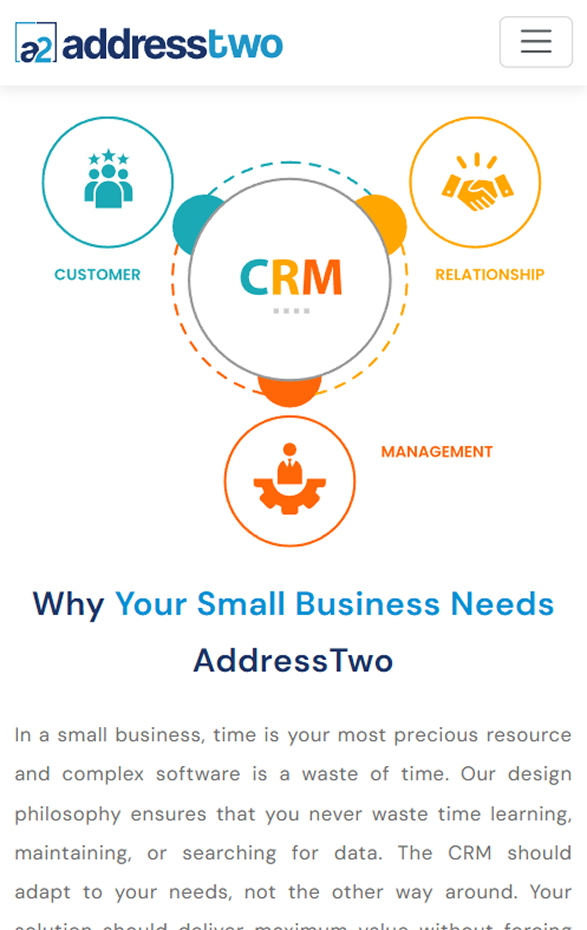
The system follows a modular CRM architecture, with each component handling a specific function throughout the customer lifecycle. The Customer Management module acts as the core data layer, storing structured customer and interaction records.
The Sales Pipeline module tracks lead progression and deal stages. The communication module oversees outbound email workflows, activity logging, and engagement tracking. The reporting layer aggregates data from all modules to generate analytics and insights. Role-based access control governs permissions, and workflow-controlled data updates maintain consistency across CRM modules.
Role-based access control governs permissions, and workflow-controlled data updates maintain consistency across CRM modules.
Key Challenges Addressed
Disconnected Data Required Control Over Workflows, Pipeline & Scale
Disconnected Customer Data
Customer records, communication history, and sales activities were managed across multiple disconnected systems. This created duplicate entries, inconsistent records, and limited visibility into ongoing interactions.
Lack of Centralized Workflow Tracking
The existing workflow structure did not provide centralized tracking for follow-ups, tasks, lead progress, or communication timelines. Teams struggled to monitor operational activities across multiple users and departments.
Large-Scale Contact Management Issues
As customer data volume increased, managing contact records became difficult. The platform required structured data organization, reliable record synchronization, contact segmentation, and fast, searchable access across large datasets.
Limited Sales Pipeline Visibility
Existing processes lacked clear visibility into active opportunities, sales stages, pending follow-ups, and conversion tracking. This reduced operational clarity during day-to-day sales management.
Disconnected Marketing and Communication Processes
Email marketing workflows operated separately from customer records and sales activities. This created gaps between campaign execution, customer engagement tracking, and follow-up management processes.
Multi-User Access and Data Consistency
The system needed reliable multi-user accessibility across distributed teams and devices. Existing workflows lacked structured access control, synchronized updates, and consistent customer data availability across operational environments.
Technical Solutions We Implemented
Centralized CRM Infrastructure For Consistent Operations
A scalable N-tier SaaS architecture consolidated customer records, sales activity tracking, communication workflows, and reporting into a single application environment.
Centralized CRM Infrastructure
A SaaS-based CRM platform was implemented as the core solution for managing customer operations. It consolidated core modules such as customer records, sales activity tracking, task workflows, and reporting into a single application environment. This eliminated reliance on disconnected tools.
Structured Customer Data Management
A relational database schema was designed to store and organize customer profiles, lead records, interaction history, and communication logs. The data model ensured consistency across entities and supported efficient querying, filtering, and cross-referencing of customer information.
Sales Pipeline and Activity Tracking
A stage-based pipeline system was developed to track leads through different phases of the sales cycle. The system recorded follow-up actions, task assignments, and lead movement across stages. This enabled structured monitoring of sales progress and operational activities.
Integrated Communication Handling
Integrated communication workflows within the CRM enabled centralized tracking of emails, engagement history, follow-ups, and customer interactions. RESTful APIs and JSON-based data exchange supported third-party integrations. Google Drive integration enabled external document storage and sharing support.
Role-Based Access Control System
Forms Authentication and role-based authorization were implemented to secure user access across CRM modules. Access levels were defined to control data visibility and operational actions based on user roles. This ensured secure, controlled access across distributed teams.
Reporting and Activity Tracking Layer
A reporting module was developed to track sales performance, customer engagement trends, and system activity logs. The module enabled reporting and analysis of operational performance metrics and customer engagement trends.
Scalable Application Architecture
The platform was built using a scalable N-tier SaaS architecture with centralized application hosting, SQL Server-backed data management, and browser-based delivery. The deployment model supported concurrent multi-user access, workload scalability, and maintainable operational expansion across CRM modules.
Why It Works Better
N-Tier Architecture For Scalable CRM Operations
The system is built on a standard N-tier architecture with clear separation between presentation (ASP.NET MVC), business logic (service layer), and data access (Entity Framework). This layered structure ensures modularity, maintainability, and controlled communication between components while supporting scalable CRM operations across multiple workflows.
SQL Server indexing is applied to frequently queried fields such as contact ID, email, and lead status to improve search efficiency and reporting performance under high data volumes. This architecture improves system stability, scalability, and performance under concurrent multi-user operations.
- Entity Framework and LINQ provided structured and consistent, type-safe database interactions across application modules.
- Parameterized LINQ filtering ensured validated search conditions while maintaining query safety and performance.
- Pagination and index-based lookup strategies improved performance for large dataset retrieval and reporting.
- Role-based access control enforced secure permissions across multiple user roles and departments.
- AJAX-based asynchronous processing improved responsiveness for inline updates and activity logging without full-page reloads.
- Bootstrap-based responsive layouts ensured consistent UI behavior across desktop, tablet, and mobile browsers.
- Customer records, sales activities, scheduling, and reporting workflows were unified into a centralized operational system.
Screens From the Live Build
Surfaces We Designed & Engineered Into Production
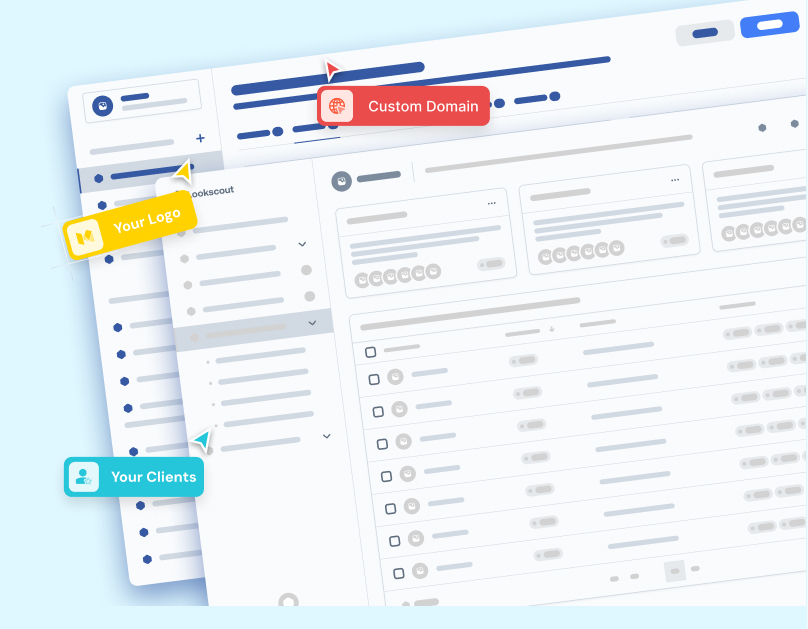
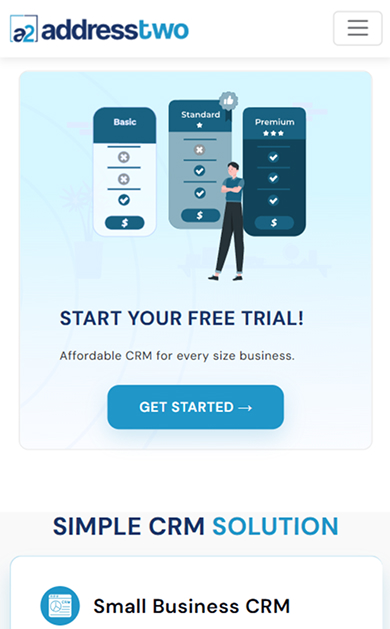
Selected moments from the shipped AddressTwo CRM platform where contact management, sales pipeline tracking, email campaigns, and reporting come together in a unified SaaS environment.

Core Features & Functionalities
Designed For End-to-End CRM Operations
- Centralized Data Management: Stores leads, contacts, and customer records in a unified structure with linked interaction history. This enables consistent access to complete profiles and supports structured CRM operations across all modules.
- Sales Pipeline Tracking: Tracks deal progression through defined sales stages, records follow-ups, and updates opportunity status in real time. It ensures visibility of active, pending, and completed sales activities within structured workflows.
- Email Marketing & Campaign Automation: Enables the creation, scheduling, and execution of targeted email campaigns using templates, audience segmentation, and automated delivery sequences. The system captures response metrics for campaign performance analysis.
- Direct Mail & Follow-up Workflows: Supports outbound physical and digital mail workflows with task scheduling, reminder generation, and structured follow-up sequences. This ensures continuous communication across selected contact groups.
- Search, Filtering & Reporting Engine: Provides a user-facing query builder that allows customers to create custom filters across CRM datasets. Users can define multi-parameter conditions with logical operators, which are converted into optimized database queries. It supports reusable filters, saved searches, and flexible reporting for dynamic data retrieval.
- Engagement Activity Tracking: Logs customer interactions, including emails, replies, meetings, and task updates, linking all events to customer profiles. This builds a consolidated view of engagement history across all communication channels.
Technologies and Tech Stack We Used
Tools Chosen For Scale & CRM Performance
.NET Framework 4.5 · ASP.NET MVC 5 · N-Tier · C# · Razor Views
N-tier architecture with Razor views for core CRM services and business logic.
SQL Server 2012 · Entity Framework · LINQ · Dynamic Queries
Relational data storage with dynamic queries and indexed lookup strategies.
HTML5 · CSS3 · Bootstrap · jQuery · AJAX · Font Awesome · CKEditor
Responsive layouts with asynchronous inline updates and activity logging.
RESTful APIs · JSON · Google Drive · PayPal · Social Media
JSON-based integrations for documents, payments, and third-party services.
iTextSharp · EPPlus · CSV Import/Export
Document generation, spreadsheet reporting, and bulk data handling.
Visual Studio 2013 · SVN · Pivotal Tracker
Integrated development, source version control, and agile project tracking across the team.
Testing & Quality Assurance
Validated For Accuracy, Access & Performance
Comprehensive testing across CRM modules, database integrity, multi-user access, frontend compatibility, AJAX interactions, and communication workflows.
- Functional testing verified lead management, campaign execution, follow-up workflows, scheduling operations, and reporting functionality across CRM modules.
- Database testing validated data consistency, record synchronization, dynamic search accuracy, saved queries, and multiple query execution across large customer datasets.
- Multi-user testing verified role-based access handling, permission control, and stable concurrent operations across distributed teams and departments.
- Frontend compatibility testing ensured responsive layout rendering and consistent accessibility across desktop, tablet, and mobile devices.
- AJAX interaction testing validated modal popup operations, inline updates, and asynchronous workflow processing without full-page reload interruptions.
- Performance and communication testing verified application responsiveness, bulk email processing, communication tracking, and accurate generation of marketing and operational reports.
Our Approach & Development Timeline
Phased Delivery Across 2 Years
The implementation followed a phased delivery approach—building core CRM architecture first, then incrementally adding communication modules, search optimization, and multi-user access controls.
Requirement Analysis & System Planning
CRM workflow definition and modular architecture specification.
Core CRM Architecture & Database Development
Relational schema design and N-tier application foundation.
Lead Management & Communication Module Development
Pipeline tracking, email workflows, and integrated communication handling.
Search, Reporting & Workflow Optimization
Query builder, indexing strategies, and reporting layer implementation.
Responsive Frontend & Multi-User Access Implementation
Bootstrap UI, RBAC, and distributed team accessibility.
Testing, Deployment & Production Stabilization
QA validation, performance tuning, and production release.
Measurable Outcomes
Operational Gains From Centralized CRM Delivery
Performance metrics were derived from CRM activity logs, reporting modules, and database monitoring over a 6-month post-deployment period under real operational usage conditions.
Customer information lookup time (down from 2–3 minutes)
Follow-up completion rates (up from 52%)
Reduction in duplicate customer records
Marketing campaign execution time (down from 6–8 hours)
The AddressTwo platform transformed fragmented customer management processes into a centralized operational system. The platform supports lead tracking, communication workflows, marketing activities, reporting, and multi-user collaboration within a single environment.
Digisoft Solution focused on building a structured, maintainable CRM architecture aligned with actual business workflows rather than isolated feature development. This approach improved workflow visibility, reduced operational complexity, and created a scalable foundation capable of supporting long-term business growth and evolving customer management requirements.