IHLAQ: Transforming On-Demand Grooming with a Scalable Barber Booking Platform








About Our Client
IHLAQ Grooming
- IndustryBeautyTech
- RegionQatar / GCC
- PlatformBarber Booking & Grooming Marketplace (Mobile + Web)
- Delivery Timeline3 Years
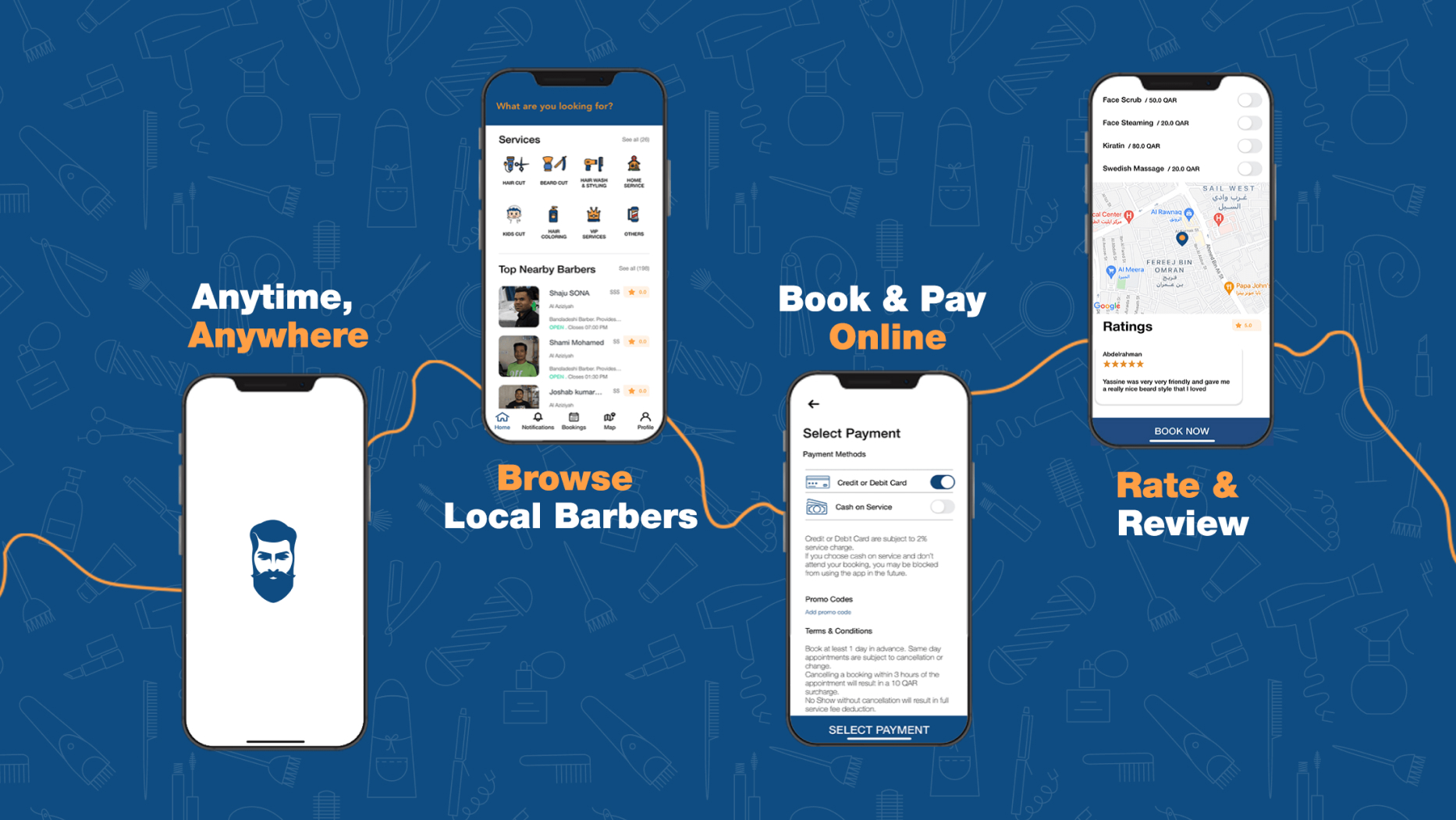
IHLAQ is a Qatar-based grooming services platform that connects customers and service providers through a unified digital system. It operates as a two-sided marketplace, supporting both individuals seeking grooming appointments and barbers or salon owners managing their services and customer interactions.
The platform is tailored for urban users who require fast, scheduled grooming services as well as customers who prefer home-based services. It enables providers to move beyond walk-in and phone-based booking models.
Built specifically for the Qatar market, IHLAQ addresses key regional requirements, including bilingual support (English and Arabic), mobile-first usage patterns, and the growing demand for on-demand services.
The system is structured to ensure accessibility, flexibility, and direct real-time connection between customers and providers within a single ecosystem.
Project Overview
Real-Time Grooming Marketplace For Qatar & The GCC
IHLAQ is a digital grooming platform built for the Qatar market, replacing manual appointment handling with a real-time booking system. It connects customers with barbers and salons across the web, iOS, Android, and Huawei AppGallery.
Previously, bookings relied on calls and messaging, leading to conflicts, double reservations, and limited visibility. Providers lacked centralized scheduling and management, while customers had no structured discovery or live booking experience.
IHLAQ addresses this with instant synchronization, centralized provider control, and bilingual support. Unlike standard marketplaces, it combines hybrid home and in-salon services with a conflict-free, state-driven booking engine.
The Concept
Booking As A Transactional State Machine
IHLAQ operates as a real-time service orchestration system, where booking functions as a transactional state machine. Availability is state-driven across unified salon and home-service models.
Confirmed bookings are synchronized system-wide in near real time. Provider scheduling, payments, and feedback follow centralized rules, ensuring consistent execution, reduced conflicts, and deterministic cross-platform behavior. This approach avoids double-booking and manual coordination issues common in traditional marketplace platforms.
A state-driven booking system with centralized orchestration ensures deterministic execution, transactional lifecycle management, and consistent cross-platform booking behavior across web, iOS, Android, and Huawei clients.

Key Challenges Addressed
High-Concurrency Booking Requires Precision, Roles & RTL Consistency
Manual coordination and fragmented visibility created conflicts and unreliable availability—especially under simultaneous demand across customers, providers, and bilingual interfaces.
Real-Time Availability Management
Handling concurrent booking requests while maintaining consistent time-slot data and preventing race conditions. This ensures that overlapping bookings cannot occur under simultaneous user activity.
Dual User System Handling
Managing two distinct user roles with separate access controls, data visibility, and operational flows. It maintains a unified data structure and consistent system behavior.
Location-Based Home Service Matching
Processing bookings based on user location by filtering available barbers within a defined service range. This ensures accurate availability mapping and reliable assignment logic.
Arabic RTL Interface Consistency
Ensuring correct right-to-left rendering across web and mobile platforms, including layout structure, navigation flow, and input behavior. It ensures consistency between different devices and screen sizes.
Technical Solutions Implemented
State-Driven Booking With Centralized Orchestration
Booking Lifecycle Management is implemented through a state-driven model (pending → confirmed → failed). This is supported by retry and rollback mechanisms to ensure transactional consistency across distributed services.
Centralized Booking Engine
A unified booking module manages time-slot allocation and reservation states. Each booking request is validated against real-time availability to prevent overlapping reservations. The system uses database-level transaction locking with atomic slot reservation to eliminate concurrent booking conflicts and maintain state consistency across all sessions.
Booking Lifecycle Management & Reliability
The system implemented a structured booking lifecycle with states such as pending, confirmed, and failed. This is supported by retry mechanisms and rollback strategies that ensure data integrity and recovery in the event of partial failures across distributed services.
Role-Based Access Control
The platform defines distinct customer and provider roles with enforced access boundaries. Each role operates within controlled permissions, providing users can access and modify only relevant data, and all operations are processed through a unified backend system.
Location-Based Service Matching
The system processes bookings using geo-coordinate-based filtering. It matches users with nearby providers based on availability. Service type constraints are applied during selection.
RTL-Compatible Multi-Platform Interface
The application supports both LTR and RTL layouts and dynamically adjusts the interface layout, navigation, and input handling based on the selected language. This ensures consistent usability across English and Arabic users on web and mobile platforms.
Unified Multi-Platform Backend Architecture
All client applications (web, iOS, Android, and Huawei) are connected to a single backend system that manages bookings, users, and service data. The system ensures cross-platform consistency through event-driven updates and API-based state validation, enabling real-time synchronization of bookings, cancellations, and modifications across all devices.
This architecture delivers deterministic booking execution, transactional lifecycle management, and synchronized multi-channel behavior—reducing scheduling conflicts and preventing state inconsistencies under high load.
Architecture Approach: Why It Works Better
Single Orchestration Layer For Deterministic Booking
A state-driven booking system with centralized orchestration ensures deterministic execution, transactional lifecycle management, and consistent cross-platform booking behavior across all clients.
- A single orchestration layer processes all bookings
- Deterministic availability check before reservation
- Transactional state model (pending, confirmed, completed, failed)
- Async background queues handle processing without blocking
- Real-time sync across customers, providers, and admin
- Role-based access control for user permissions
- Location-based matching for service accuracy
- Unified backend rules across web and mobile
Overall, it reduces scheduling conflicts, prevents state inconsistencies, and ensures predictable behavior under high load while maintaining cross-platform consistency and real-time accuracy.
Screens From the Live Build
Surfaces We Designed & Engineered Into Production
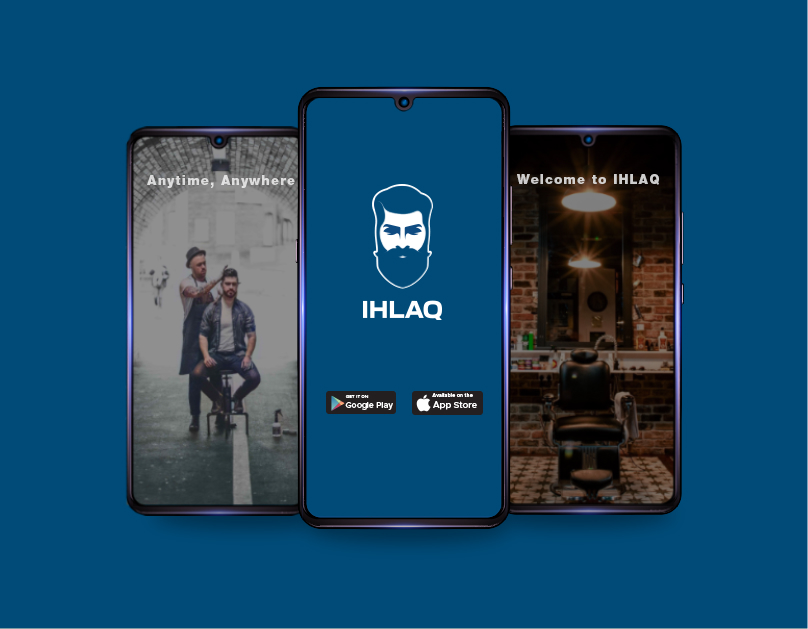
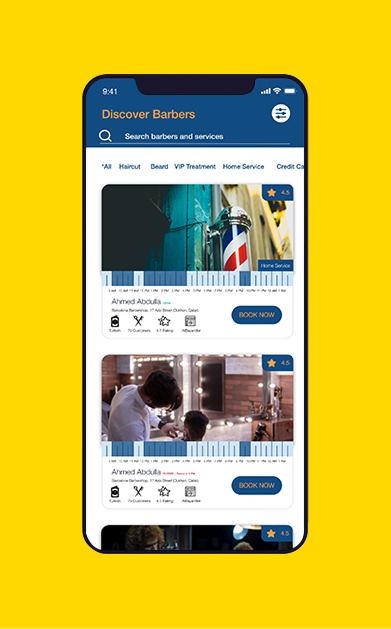
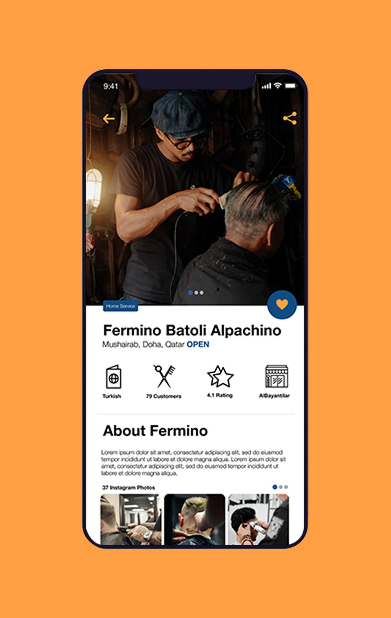
Selected moments from the shipped IHLAQ platform—discovery, scheduling, hybrid services, provider tooling, and synchronized booking flows across web and mobile.



Core Features & Functional Capabilities
Built For Discovery, Scheduling & Hybrid Delivery
- Search, Discovery & Location Matching System: Location-based search enables users to discover nearby barbers and salons using proximity filters. We refined results based on service type, availability, and predefined matching criteria. This improves accuracy and relevance in provider discovery.
- Service Catalog & Provider Management: Each provider maintains a structured service catalog that includes pricing and duration, along with service definitions. Providers also manage profiles, working hours, and service listings through a centralized system, ensuring consistent mapping between services and scheduling logic across the platform.
- Scheduling & Availability Engine: Provider availability is managed through real-time slot mapping, where service duration is directly linked to available slots. Booking validation ensures conflict-free scheduling by preventing overlapping reservations and maintaining accurate real-time availability across all platforms.
- Booking Lifecycle Management System: The end-to-end booking flow handles provider, service, and time selection and confirmation within a unified system. Each booking follows a structured lifecycle: pending, confirmed, and failed, with real-time synchronization between customers and providers to ensure consistent state management.
- Multi-Service Handling & Payment Processing: The platform supports both shop-based and home-based services, with location validation ensuring home service requests fall within defined coverage areas. Payment processing supports both online and offline methods, with transactions directly tied to booking states such as pending, paid, failed, and refunded to ensure system consistency.
- Ratings, Notifications & System Synchronization: Post-service ratings and reviews are linked to provider profiles to support quality evaluation and user decision-making. Booking confirmations, updates, and schedule changes are delivered through real-time notifications, ensuring continuous synchronization of all booking data across customer and provider systems.
Technologies and Tech Stack We Used
Stack Built For Laravel, Mobile & Real-Time Scale
Laravel (PHP)
Unified APIs, booking orchestration, and transactional workflows.
Laravel Blade
Server-rendered views integrated with application logic and localization.
MySQL
Relational store for availability, bookings, users, and transactional integrity.
iOS (App Store)
Native customer and provider experiences aligned with shared backend rules.
Android (Google Play)
Cross-platform parity with synchronized booking and notification flows.
Huawei (AppGallery)
Extended GCC reach with the same orchestration and validation pipeline.
Testing & Quality Assurance
Validated For Concurrency, RTL & Cross-Platform Integrity
Booking lifecycle validation from creation through cancellation, under concurrent load and bilingual UX constraints.
- Booking validation for create, update, and cancel operations
- Availability checks under concurrent requests to prevent duplicates
- API testing across web, mobile, and backend
- Form validation for booking, profile, and service inputs
- Role-based access validation for correct data control
- Search and filtering validation by location and availability
- Payment validation for online and offline booking linkage
- Data consistency checks across platforms
- Language and RTL layout validation (English and Arabic)
- Cross-platform testing (web, iOS, Android, Huawei)
- Error handling for invalid and failed operations
- Security checks for HTTPS and data protection
Our Approach & Development Timeline
Phased Delivery Across 3 Years
The IHLAQ platform was developed over three years, progressing from core system design to full-scale deployment, with stable, consistent performance.
MVP Core Architecture
Foundation for booking orchestration, users, and provider workflows.
Feature Expansion & API Layer
Expanded capabilities and structured APIs for multi-channel clients.
Mobile Integration & Cross-Platform Support
iOS, Android, and Huawei aligned with unified backend rules.
Localization & System Optimization
Bilingual UX, RTL refinement, and performance tuning.
Testing, Hardening & Deployment
QA, security validation, and production rollout.
Measurable Outcomes
Measurable Load, Speed & Operational Efficiency
IHLAQ demonstrates Digisoft Solution’s ability to build scalable, real-time booking systems with synchronized multi-platform architecture and consistent data integrity across web and mobile platforms.
Bookings processed during peak daily load (APM-validated)
System availability vs 92% baseline uptime
Average response time under concurrent load
Near real-time synchronization via event-driven queues
Reduction in manual scheduling through automation
Faster service discovery via location-based search
Improvement in provider scheduling efficiency through centralized availability control
This ensures consistent data handling, stable performance, and scalable operations across web and mobile platforms—with conflict-free scheduling and accurate availability for customers and providers.